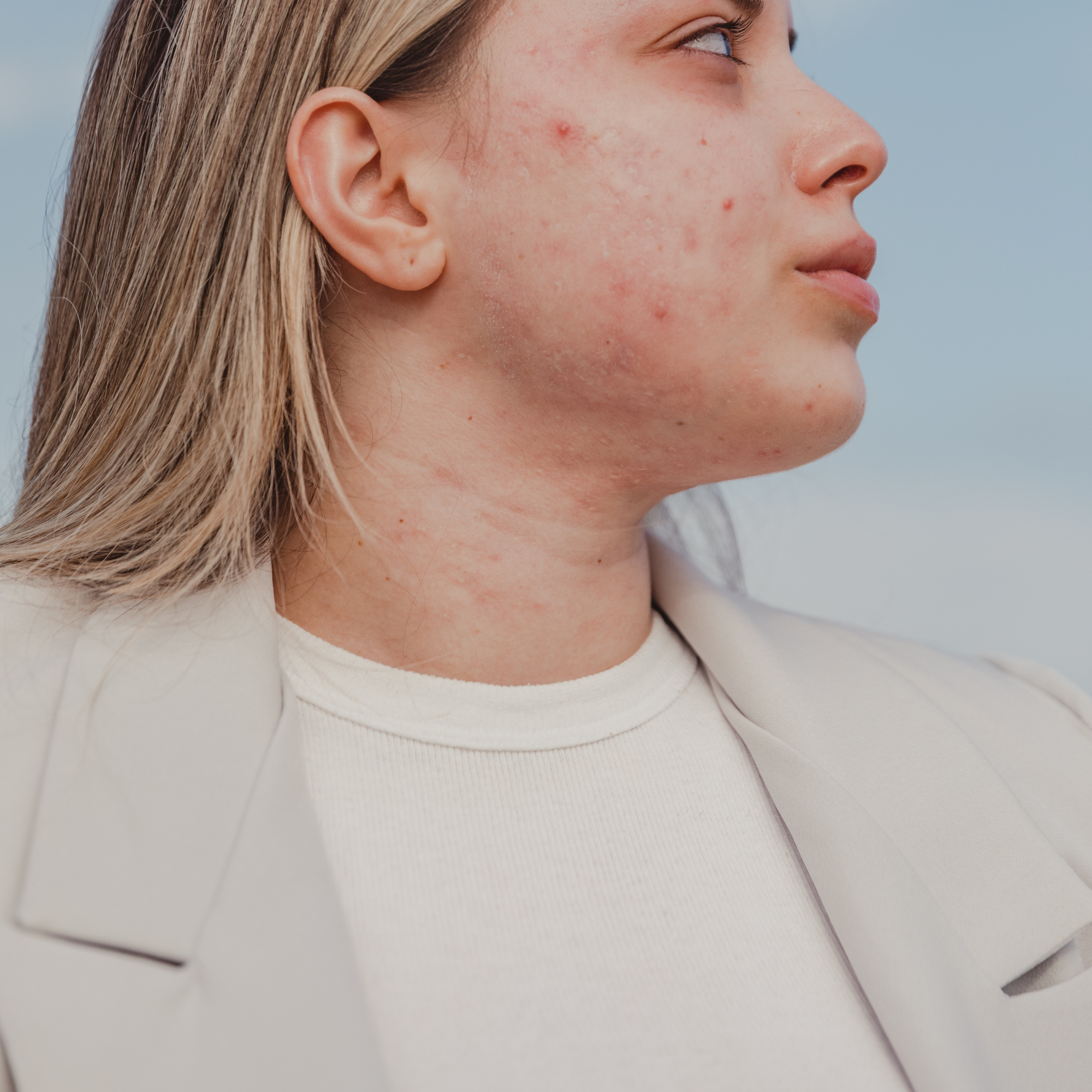
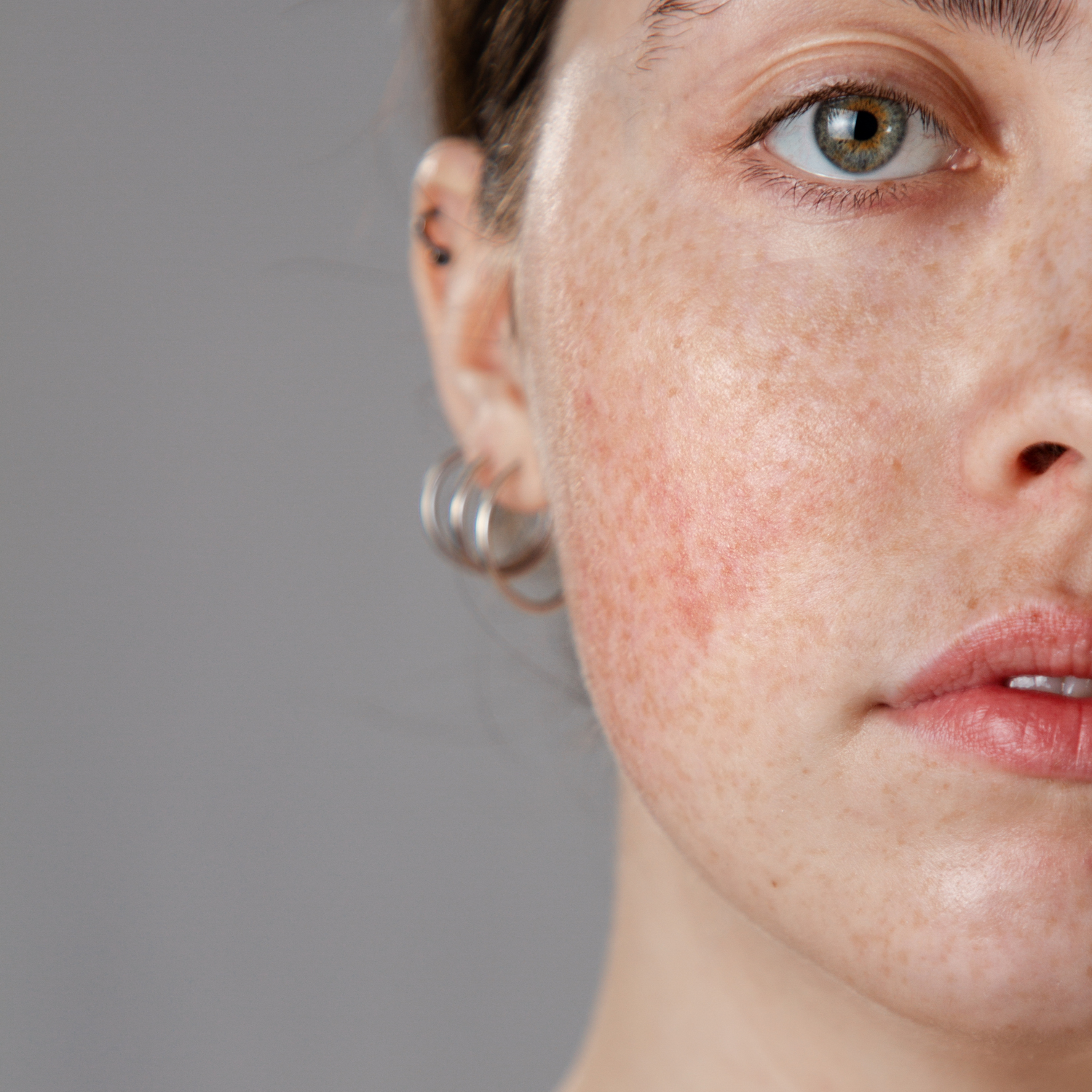
Maybe you know this: your face suddenly glows, your cheeks and nose are fiery red, your skin feels tight and burns – and no matter what you try, the redness remains. What you are experiencing could be rosacea on the face. This chronic inflammatory skin condition primarily affects fair-skinned women from middle adulthood onwards and is surprisingly often unrecognized. Many affected individuals ask themselves: "Is rosacea lifelong? Why does my rosacea skin suddenly react to everything?"
In this guide, you will learn what rosacea is, how to recognize the early stages of rosacea, which symptoms are typical for rosacea on the face, and what the correct rosacea treatment looks like – including care tips for everyday life.
What is Rosacea?
Rosacea (medically: acne rosacea) is not an allergy and is not contagious. It is a chronic inflammatory disease of the fine blood vessels in the face that leads to persistent skin redness. Experts now distinguish four main forms:
- In the erythematotelangiectatic form, permanent redness dominates. Tiny expanded veins run through the rosacea skin like fine spider webs – especially on the cheeks and nose.
- In papulopustular rosacea, inflammatory nodules and pustules also appear. These are often mistakenly perceived as acne.
- Significantly rarer is the phymatous form: here, connective and sebaceous gland tissue thickens and proliferates – especially on the nose. This creates the so-called rhinophyma, colloquially "bulbous nose."
- In ocular rosacea, the eyelids are primarily affected. Those affected complain of a foreign body sensation, burning, or light-sensitive, red eyes.
These phenotypes can occur individually or in combination and change over the course of time. Depending on the severity, the skin condition, symptoms, and suitable therapy differ.
The disease progresses in flare-ups. A genetic predisposition in combination with an overreaction of the innate immune system, vascular dysfunction, and external triggers (heat, UV light, alcohol, stress) leads to a dilation of the blood vessels. The result: inflammation substances flow unchecked into the skin. Redness, burning, itching, and papules or pustules are the result. Left untreated, the redness can solidify and permanently change the skin structure – but it doesn't have to get that far.
Rosacea Nose: Recognizing Symptoms
The nose is one of the most frequently affected areas in rosacea on the face. Especially the rosacea nose is perceived by those affected as particularly burdensome because it lies in the middle of the face and can hardly be hidden. The rosacea nose typically shows itself through:
- Permanent redness on the bridge of the nose and the nasal wings, which does not subside completely even during rest phases.
- Visible veins (telangiectasias) that shimmer through the skin as fine red lines.
- Enlarged pores and a coarser skin texture in the nose area.
- Swelling and tissue thickening – in an advanced stage, a rhinophyma can develop, in which the connective tissue on the nose proliferates in a bulbous manner.
- Sensitivity to touch – even light rubbing when blowing the nose can trigger redness and burning.
Especially on the nose, the skin is particularly thin and rich in vessels, which is why rosacea often shows here first and most clearly. Many affected individuals report that the rosacea nose is less noticeable in the morning and becomes more intense during the day – especially after eating or in warmth. If you notice that your nose is regularly red without an apparent reason, you should think of rosacea and see a dermatologist.
How Does Rosacea Develop? Vessels, Nerves, and Immune Reactions
The exact cause is not yet fully understood, but three mechanisms play a key role:
- Messenger substances like CGRP (Calcitonin Gene Related Peptide) and Substance P cause the vascular muscles to relax and lead to a permanent dilation of the superficial vascular network.
- The innate immune system reacts hypersensitively: the antimicrobial messenger substance cathelicidin is formed in a particularly aggressive form in rosacea patients and heats up the inflammation.
- An altered skin microbiome – above all the increasingly occurring mite Demodex folliculorum – puts immune cells on permanent alert.
Environmental factors like UV radiation, spicy spices, alcohol, or strong temperature fluctuations act as triggers that cause the sensitive balance to tip.

Early Stages of Rosacea: Interpreting First Signs Correctly
How do you recognize the early stages of rosacea? The first signs are often so subtle that they are overlooked for months. Typical early signs are:
- Fleeting facial redness (flushing): Your face suddenly glows – after a glass of wine, entering a warm room, or after sports. The redness initially disappears completely.
- Sensitivity reaction: Your facial skin suddenly reacts to products you have tolerated without problems before. Creams burn, water feels uncomfortable.
- Tightness and slight stinging: Even without visible redness, the skin in the rosacea face feels irritated.
- Heat sensation: You perceive an internal heat in your face, although the ambient temperature is normal.
Later, the redness increasingly remains – cheeks, nose, or forehead look permanently slightly sunburned. On closer inspection, tiny red veins become visible. During active flare-ups, small nodules and yellowish pustules appear that remind of acne but distinguish themselves by the absence of typical blackheads.
Important: As soon as redness becomes more frequent or papules are added, a medical diagnosis is advisable. Dermatologists usually diagnose rosacea clinically; in unclear cases, dermatoscopy or rarely a biopsy can be helpful to exclude other diseases like lupus or perioral dermatitis.
Rosacea Treatment: What Really Helps
Rosacea treatment rests on three pillars: proper skincare, medical therapies, and consistently avoiding triggers. A complete cure is not possible to date, but the symptoms can be pushed back so far that they are barely noticeable.
Skincare for Rosacea: Soothe, Strengthen, Protect
Proper skincare is the basis of every rosacea treatment. Less is more – this minimalist approach simultaneously forms the core of the SKINDIVIDUAL philosophy.
Cleansing: Gentle instead of sharp
- Use fragrance-free, pH-skin-neutral gel or milk cleansers without sulfates and microplastics.
- Use lukewarm water – no hot showering. Pat your face gently dry instead of rubbing.
- Cleanse once daily in the evening. In the morning, clear water or a gentle micellar product is often enough.
Moisture & Barrier Protection
- Niacinamide (2–5%) soothes redness and strengthens the skin barrier.
- Ceramides + Squalane preserve the lipid film of your rosacea skin.
- Hyaluronic acid: Low-molecular hyaluronic acid is well-tolerated by many affected people but can increase burning in very reactive skin. Always perform a patch test.
For papules and pustules, a zinc oxide ointment applied thinly overnight can significantly reduce inflammation. Those thinking about anti-aging reach for mild retinal or low-dose retinol (maximum 0.3%). These should be built into the routine slowly, at most twice a week.
Sun protection – the most important step
Since UV light is one of the strongest rosacea triggers, you need a mineral sun protection factor of 30 to 50 (zinc oxide, titanium dioxide). Mineral filters simultaneously reflect heat – killing two birds with one stone. Use light, non-occlusive formulations, because too heavy textures can promote heat build-up and flushing.
Minimalist Routine with SKINDIVIDUAL
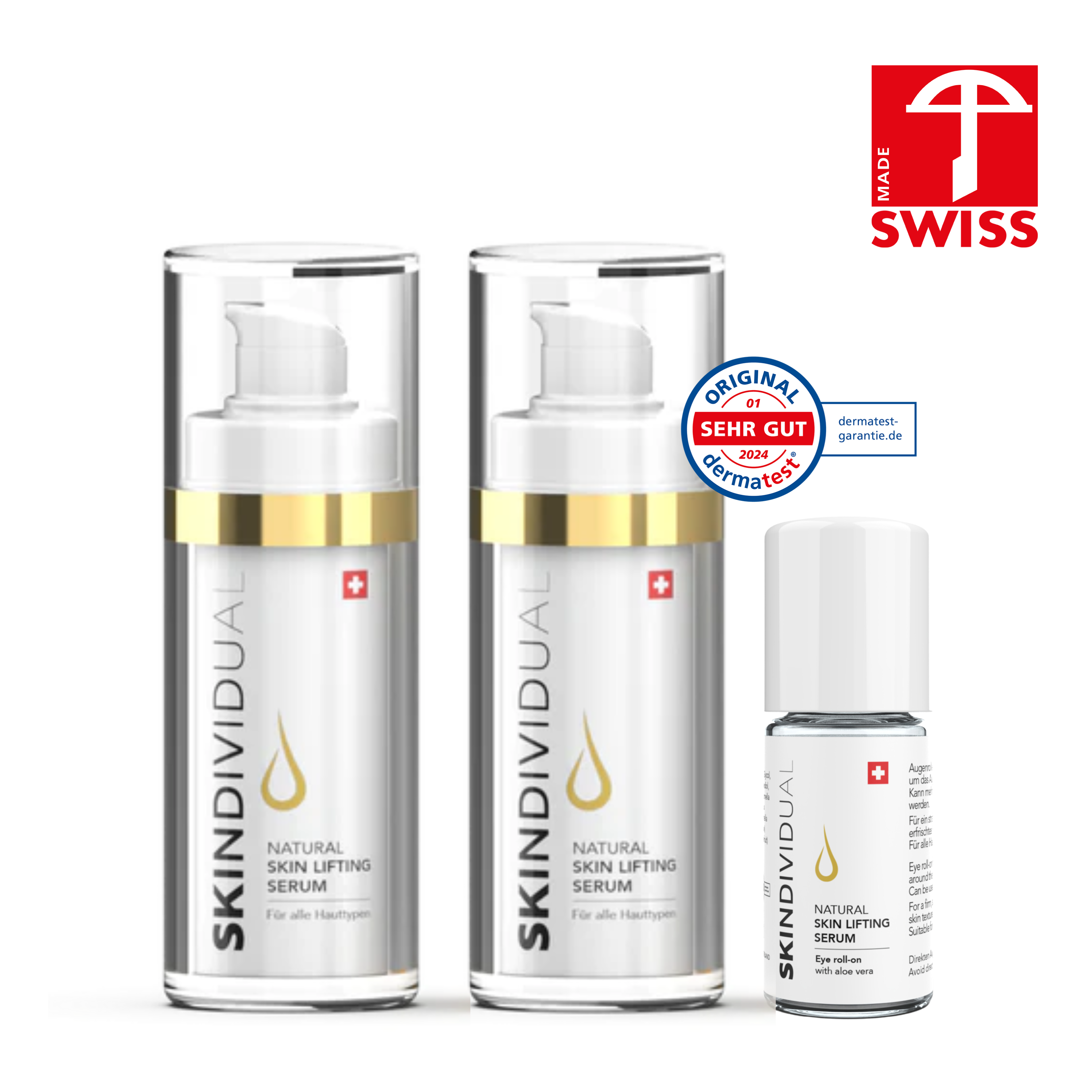
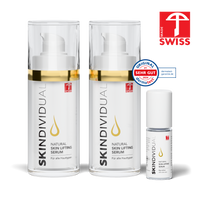
Our SKINDIVIDUAL Natural Skin Lifting Serum consciously relies on a few, well-tolerated raw materials to not overwhelm sensitive rosacea skin. Spilanthol and Centella soothe micro-inflammation, while hyaluron in cross-linked form binds water without leaving an occlusive fat film – perfect for rosacea skin that needs moisture but no fat film.

Medical Rosacea Treatment
Topical Therapies
If care and trigger control are not enough, the dermatologist prescribes local medications. Metronidazole gel has an anti-inflammatory effect and is prescribed primarily for papulopustular rosacea. It is usually applied thinly to the affected areas twice daily and shows significant improvement after about four to six weeks. Ivermectin cream specifically intervenes in the environment of the Demodex mite and simultaneously lowers the level of inflammatory messengers. If permanent redness in the rosacea face is in the foreground, vasoconstricting gels like brimonidine are used, which reduce erythema within minutes, though they only work for a few hours and must be applied daily.
Systemic Options
If nodules and pustules are very numerous, doctors use low-dose doxycycline (40 mg ret.), which acts less as an antibiotic and more anti-inflammatorily. This dosage is chosen so that it does not promote antibiotic resistance but effectively interrupts the inflammation cascade. In severe, therapy-refractory courses, low-dose isotretinoin is an option that must be strictly medically monitored, as side effects like dry skin and mucous membranes can occur.
Apparatus-based Procedures
Persistent vessels and visible veins can be almost completely obliterated with pulsed dye lasers, Nd:YAG, or IPL flash lamp devices. Rosacea treatment with laser usually requires two to four sessions at intervals of several weeks. For pronounced rhinophyma – an advanced form of rosacea nose – a CO₂ laser can gently remove excess skin and harmonize the contour of the nose.

When Your Face Suddenly Glows: Recognizing and Avoiding Triggers
"My face is glowing" – rosacea patients know this sentence all too well. Symptoms often appear seemingly out of nowhere, but there is almost always a concrete trigger behind them. The most common triggers for rosacea on the face are:
- Temperature changes: From cold winter into a heated apartment – this change makes vessels in the rosacea face react immediately.
- UV radiation: Even on cloudy days, UV light penetrates through and can trigger a flare-up.
- Spicy foods and hot drinks: Capsaicin and hot steam additionally dilate blood vessels.
- Alcohol: Red wine, in particular, is a frequent flush trigger.
- Stress and sleep deprivation: Emotional strain influences the immune system and can favor rosacea flare-ups.
- Aggressive cosmetics: Products with fragrances, alcohol, or fruit acids additionally irritate already sensitive rosacea skin.
Our tip: Keep a trigger diary. Note when your face glows and what you ate, drank, or did beforehand. Also record how strong the redness was and how long it lasted. After a few weeks, you will recognize patterns that help you specifically avoid flare-ups. Many affected individuals find that it is not a single trigger, but the combination of several factors that triggers the flare-up – for example, stress plus red wine plus a room that is too warm.
Psychosocial Dimension and Self-Management
Rosacea on the face is visible – this can impair self-confidence. A holistic management therefore also includes:
- Reduce stress through movement and meditate regularly.
- Observe sleep and hormonal fluctuations.
- Exchange in rosacea groups, which can provide emotional relief.
Your Roadmap to Calm Skin
Rosacea is chronic, but not an unchangeable fate. Those who understand the disease, recognize the early stages of rosacea in time, and combine minimalist skincare with consistent rosacea treatment can experience long phases of almost symptom-free skin. It is crucial that you do not wait until the symptoms in the rosacea face worsen, but act early.
Your next step:
- Have your symptoms clarified by a doctor – especially if you notice a rosacea nose or a permanently red rosacea face.
- Switch your routine to gentle cleansing, targeted active ingredients, and consistent UV protection.
- Observe your triggers and give your skin time – often just a few weeks are enough to see initial improvements.
SKINDIVIDUAL accompanies you with scientifically developed, skin-soothing formulations that concentrate on the essentials. Less is more – also with rosacea.