Fruit Acid Peel: Effects, DIY Recipe, and Proper Aftercare
Even skin texture, fewer wrinkles, and a radiant complexion – these are the promises associated with a fruit acid peel. But what's really behind it? How does a fruit acid peel affect your skin, and can you do it yourself at home? In this guide, you'll learn everything about the effects of fruit acid peels, get tested DIY recipes, and learn why proper aftercare is just as important as the peel itself. We also show you how a fruit acid peel helps against wrinkles and acne, and how you can even make a body scrub yourself.
What Is a Fruit Acid Peel and How Does It Work?
When talking about a fruit acid peel, we mean chemical peels based on alpha-hydroxy acids (AHA). These natural acids are found in many fruits and foods – such as glycolic acid from sugar cane, lactic acid from yogurt, malic acid from apples, or mandelic acid from bitter almonds. Unlike mechanical scrubs with abrasive particles, a fruit acid peel works without friction and is therefore much gentler.
How a Fruit Acid Peel Affects Your Skin
The effect of a fruit acid peel is based on a simple but effective principle: the fruit acids dissolve the so-called desmosomes – the connecting bridges between dead skin cells in the top layer of the skin. This gently removes old, dead cells without the need for rubbing or scrubbing. What happens next is a cascading effect:
Cell renewal is boosted: Once the top layer is removed, young skin cells (keratinocytes) migrate to the surface faster. Your skin looks fresher and finer.
Collagen production increases: The controlled chemical stimulus activates fibroblasts in the dermis, which produce more collagen and elastin. The result: more firmness and fewer wrinkles.
Pigment spots fade: Through continuous cell renewal, superficial melanin accumulations are broken down step by step. Your complexion becomes more even.
Pores are refined: Clogs in the pores dissolve, the skin surface looks smoother and more even.
The Different Fruit Acids and Their Strengths
Not every fruit acid works the same. Depending on molecular size and properties, a different AHA is suitable for your skin type:
- Glycolic acid: The smallest AHA molecular size, penetrates particularly deep into the skin. Ideal for mature skin and collagen stimulation. Concentration for home use: 5–10%.
- Lactic acid: Binds moisture particularly well and strengthens the skin barrier. Perfect for dry or sensitive skin.
- Mandelic acid: Larger molecules ensure a gentler, slower effect. Well-tolerated by sensitive skin prone to redness.
- Citric acid: Has a brightening effect and promotes an even complexion by breaking down superficial pigmentation.
- Salicylic acid (BHA): Strictly speaking, not a fruit acid, but an important supplementary active ingredient. Fat-soluble, penetrates deep into the pores, and is particularly effective against acne and blackheads.
Fruit Acid Peel Against Wrinkles: How the Anti-Aging Effect Works
One of the strongest arguments for a fruit acid peel is its effect against wrinkles. Particularly from the age of 30, natural skin renewal slows down. Collagen production decreases, and the first fine lines and wrinkles become visible. This is exactly where the fruit acid peel against wrinkles comes in.
Through regular use (once a week at home, monthly professionally), the following happens:
- The top, often thickened horny layer is removed, revealing fresh, young skin cells.
- Collagen and elastin production is measurably increased – clinical studies show visible wrinkle reduction after 12 weeks of regular AHA application.
- Fine lines around the eyes and mouth become softer, skin feels firmer and more elastic.
- Age-related pigment spots and a dull complexion are treated simultaneously.
For the anti-aging effect, glycolic acid in a concentration of 8–10% is particularly suitable. However, always start with a low dose (5%) and gradually increase the concentration so your skin can get used to it.
Fruit Acid Peel for Acne: Clarifying Effect for Impure Skin
If you suffer from acne, blackheads, or recurring impurities, a fruit acid peel can bring real relief. A fruit acid peel for acne works in several ways:
- Pore-deep cleansing: AHAs dissolve the bonds of dead skin cells that, together with sebum, clog pores. Blackheads and pimples are deprived of their breeding ground.
- Anti-inflammatory: Especially in combination with salicylic acid (BHA), the peel penetrates deep into the pore and has an antibacterial effect.
- Scar reduction: Regular fruit acid peels promote cell renewal so intensively that even shallow acne scars fade over time.
- Sebum regulation: AHAs help mitigate excessive sebum production in the T-zone without drying out the skin.
Important for acne: Do not use concentrations that are too high. Start with 5% glycolic or mandelic acid and observe how your skin reacts. Slight tingling is normal – strong burning means: reduce concentration or shorten application time. In case of inflammatory acne (pustules, cysts), you should consult a dermatologist before using a fruit acid peel.
Fruit Acid Peel DIY: 4 Recipes for Home Use
You don't have to reach for high-dose professional products right away. Doing a fruit acid peel yourself is easier than you think – with ingredients you probably already have at home. Here are four proven DIY recipes:
Recipe 1: Yogurt-Honey Peel (Gentle, for Beginners)
- 2 tbsp natural yogurt (contains natural lactic acid)
- 1 tsp honey (antibacterial and moisturizing)
- Optional: a few drops of lemon juice
Mix everything, apply to clean face, and leave on for 10–15 minutes. Rinse with lukewarm water. Ideal for dry and sensitive skin that is to be gently introduced to fruit acids.
Recipe 2: Apple Cider Vinegar-Oat Peel (Clarifying, for Impure Skin)
- 1 tsp organic apple cider vinegar (rich in malic acid)
- 3–4 drops fresh lemon juice
- 1 tbsp fine oatmeal (soothing and gently exfoliating)
Mix ingredients, apply gently to face, and leave on for 5–7 minutes. Rinse thoroughly with water. Use once a week to avoid irritation.
Recipe 3: Strawberry-Yogurt Mask (Fruity, for Dull Complexion)
- 3–4 ripe strawberries (contain natural AHAs and vitamin C)
- 1 tsp natural yogurt
- Optional: 1/2 tsp honey
Puree strawberries, mix with yogurt and honey. Apply to face, leave on for 10 minutes, and rinse gently. The natural fruit acids of the strawberries provide an immediate freshness kick.
Recipe 4: Pineapple-Papaya Power Mask (Intense, for Experienced Users)
- 2 tbsp freshly pureed pineapple (contains bromelain and natural AHAs)
- 1 tbsp pureed papaya (contains papain)
- 1 tsp honey
Puree fruits, mix with honey, and apply to face. Leave on for a maximum of 8 minutes – this combination is quite intense. Rinse thoroughly and immediately apply a soothing moisturizer.
Tip: Perform a patch test on the inside of your forearm with every new DIY recipe. Wait 24 hours before applying the peel to your face.
Body Scrub DIY: Fruit Acid for the Whole Body
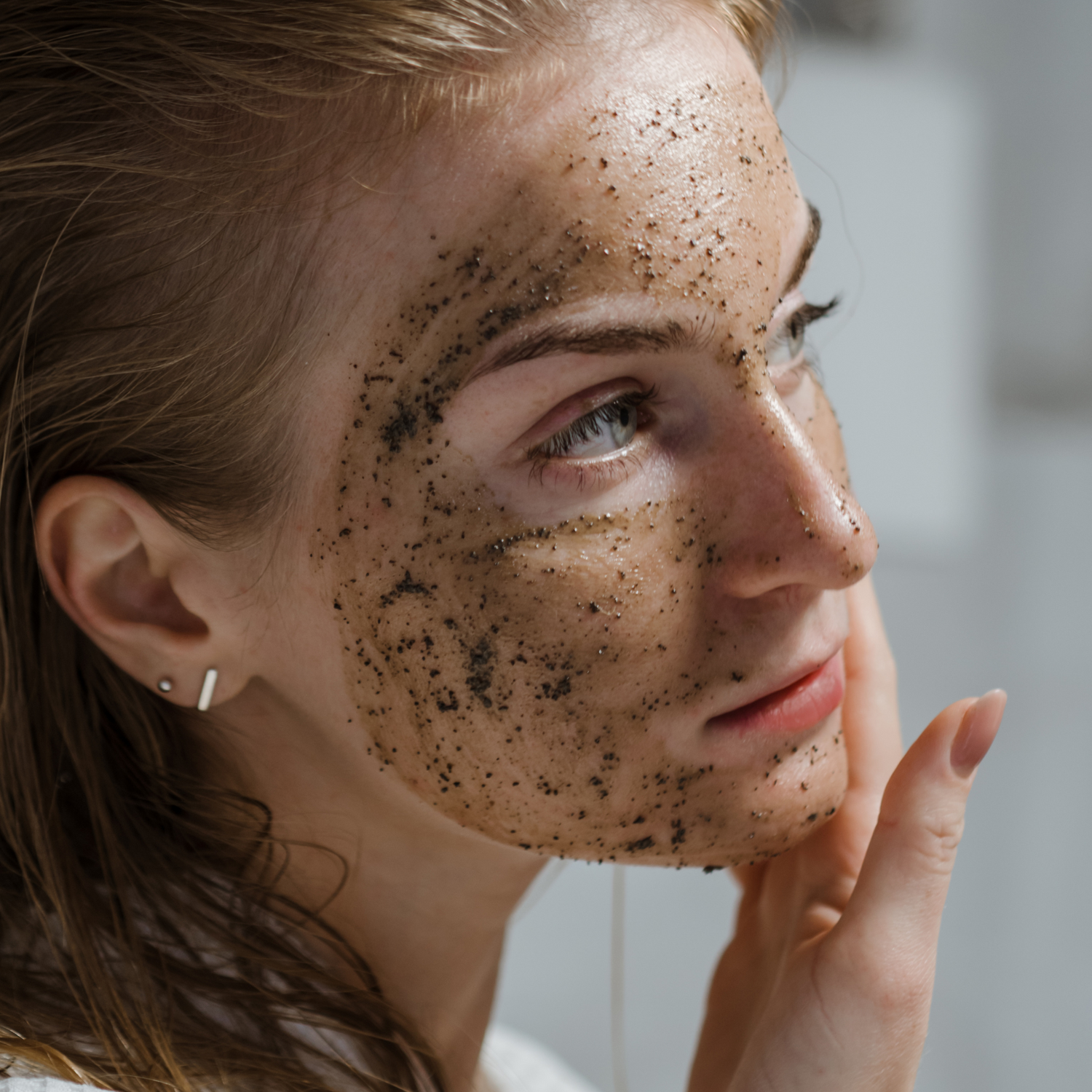
A fruit acid peel is not only suitable for the face. You can also benefit from the clarifying and smoothing effect on the body – for example, for rough elbows, keratosis pilaris on upper arms, or ingrown hairs on legs. Making a body scrub yourself is easy:
Sugar-Citrus Body Scrub
- 4 tbsp brown sugar (mechanical exfoliation)
- 2 tbsp coconut oil (nourishes and protects)
- Juice of half a lemon (citric acid as natural AHA)
- Optional: 1 tsp apple cider vinegar
Mix all ingredients and apply to damp skin in circular motions in the shower. Knees, elbows, upper arms, and thighs particularly benefit from the combination of mechanical and chemical exfoliation. Rinse thoroughly afterward and moisturize your body generously.
Yogurt-Salt Body Scrub
- 3 tbsp coarse sea salt
- 2 tbsp natural yogurt (lactic acid)
- 1 tbsp olive oil
Mix and apply to damp skin. Massage gently for 2–3 minutes, then rinse. The salt mechanically removes dead skin cells, while the lactic acid from the yogurt takes over chemical exfoliation.
Important for body scrubs: Avoid freshly shaved areas, open wounds, or sunburn. Use the body scrub a maximum of once or twice a week.
The Right Aftercare After a Fruit Acid Peel
Aftercare after a fruit acid peel is just as decisive as the peel itself – if not even more important. After application, your skin barrier is temporarily weakened and particularly permeable. This means, on the one hand, that skincare active ingredients are now absorbed particularly well. On the other hand, your skin is more sensitive to external influences.
Immediately After the Peel: The First 24 Hours
- Soothe: Apply a serum or cream with panthenol, allantoin, or bisabolol. These ingredients soothe redness and support regeneration.
- Moisturize: Hyaluronic acid and glycerin draw water into the skin and plump it up from within. A light serum followed by a rich cream is ideal.
- Strengthen barrier: Products with ceramides, cholesterol, and essential fatty acids help restore the skin's lipid network quickly.
- Apply sun protection: This is the most important step in aftercare after a fruit acid peel. Your skin is now significantly more light-sensitive. Use a broad-spectrum sun protection with at least SPF 30, even on cloudy days. Apply generously and reapply after 2 hours.
The Days After: What You Should Avoid
- No retinol for 2–3 days after the peel. Then reintroduce it slowly in low concentration.
- No vitamin C in high concentration directly after the peel – wait at least one day.
- No further peels (neither mechanical nor chemical) for at least a week.
- No heavy sweating (sauna, intense exercise) for 24 hours, as sweat can irritate freshly peeled skin.
- No scented products or alcohol on treated skin.
Step-by-Step: Correct Application of Fruit Acid Peel
To ensure your fruit acid peel works optimally and you avoid irritation, stick to this order:
Preparation
Cleanse your face with a mild, pH-skin-neutral cleanser. Do not use greasy products, as oils reduce the effectiveness of the fruit acid. Optional: apply an alcohol-free facial toner to optimize the skin's pH (ideal: pH 3.5–4.0).
Application
- Apply: Distribute the fruit acid peel evenly over face, neck, and décolleté. Avoid eye and mouth areas.
- Let sit: Depending on concentration, 2–15 minutes. Strictly follow manufacturer instructions. For DIY peels: 5–10 minutes.
- Neutralize and rinse: Some products contain an integrated pH buffer. For others, separate neutralization is necessary. In any case, rinse thoroughly with lukewarm water.
- Aftercare: Immediately apply the aftercare routine described above – soothe, moisturize, protect.

Advantages Over Mechanical Peels
Why is a fruit acid peel worth it compared to a classic peel with abrasive particles? The differences are clear:
| Property | Fruit Acid Peel | Mechanical Peel |
|---|---|---|
| Mode of action | Chemical, dissolves cell bonds | Mechanical, rubs off cells |
| Skin barrier | Remains intact, no micro-injuries | Risk of micro-tears |
| Depth of action | Controllable via acid choice/concentration | Difficult to control |
| Uniformity | Homogeneous effect over the entire area | Uneven, depending on pressure |
| Supplementary care | Many formulations contain moisturizers | Can remove hydrolipid film |
| Anti-aging effect | Stimulates collagen production | No deep-reaching effect |
Who Is a Fruit Acid Peel Suitable For?
A fruit acid peel is versatile and suitable for various skin types and needs:
- Mature skin: Collagen stimulation through AHA helps smooth out wrinkles and give the complexion new freshness. Fruit acid peel against wrinkles is one of the most effective anti-aging methods you can do at home.
- Impure skin and acne: Fruit acid peel for acne clarifies clogged pores and reduces inflammation. Combined with salicylic acid, acne scars are also visibly softened.
- Pigment spots and sun damage: Regular use lightens superficial pigmentation and ensures an even complexion.
- Combination skin: AHAs regulate sebum production in the T-zone, while lactic acid provides moisture to dry areas.
- Sensitive skin: With mild mandelic acid or low-dose lactic acid, you can start gently without risking redness or irritation.
When You Should Refrain from a Fruit Acid Peel
A fruit acid peel is not suitable if:
- Open wounds, active cold sores, or severe eczema are present
- Fresh sunburn
- Concurrent use of photosensitizing medications (e.g., certain antibiotics)
- Pregnancy (clarify with doctor beforehand)
A patch test before the first application is mandatory in any case.

Frequently Asked Questions About Fruit Acid Peels
How often should I apply a fruit acid peel?
At home, once a week with an AHA concentration of 5–10% is sufficient. Professional treatments at a beauty institute can be performed once or twice a month, depending on your skin type.
Does a fruit acid peel help with acne?
Yes, a fruit acid peel for acne is very effective. AHAs dissolve clogs in pores, and in combination with salicylic acid (BHA), impurities and bacteria are fought deep in the pore. With regular use, acne scars also fade visibly.
Can I use a fruit acid peel on sensitive skin?
Yes, but choose a mild acid like mandelic acid or low-dose lactic acid (below 5%). Start with short application times and increase slowly. The DIY yogurt-honey mask is an ideal start if you want to make a gentle fruit acid peel yourself.
What is the most important aftercare after a fruit acid peel?
Sun protection with at least SPF 30 – without exception. Your skin is significantly more light-sensitive after a peel. Supplement aftercare with soothing ingredients (panthenol, allantoin) and intensive moisture (hyaluronic acid, ceramides).
Does a fruit acid peel work against wrinkles?
Yes, a fruit acid peel against wrinkles is one of the most effective anti-aging methods you can apply at home. Glycolic acid demonstrably stimulates collagen production, leading to more skin firmness and visibly softened wrinkles.
Can I make a body scrub with fruit acid myself?
Absolutely. Making a body scrub yourself works best with a combination of mechanical exfoliation (sugar or salt) and chemical exfoliation (lemon juice, apple cider vinegar, or yogurt). Recipes can be found earlier in this article.
Conclusion: Fruit Acid Peel – Gentle Renewal for Radiant Skin
A fruit acid peel is far more than a beauty trend. It is a scientifically founded method to remove dead skin cells, stimulate collagen production, and help your skin achieve an even, radiant complexion. Whether you want to make a fruit acid peel yourself, specifically use a fruit acid peel against wrinkles or acne, or are looking for the right aftercare – with the right recipes, appropriate concentration, and consistent follow-up care, you get the most out of your skin.
Start gently, increase slowly, and never forget sun protection. Your skin will thank you with radiance and firmness.