Hormonal acne affects millions of adults and is far more than just a cosmetic problem. Maybe you know the feeling: you thought pimples belonged to puberty – and suddenly, at 30, 40, or even 50, painful impurities appear. Especially stubborn pimples around the mouth and chin that simply refuse to disappear are particularly frustrating. The good news: if you understand the causes of hormonal acne and take targeted action, you can sustainably improve your skin condition. In this guide, you will learn everything about hormonal pimples – how to recognize them, what's behind them, and which treatment really helps.
What is Hormonal Acne?
Hormonal acne is a form of acne triggered by fluctuations in the hormonal balance. Unlike classic puberty acne, it often occurs in adults and is therefore also referred to as acne tarda (late-onset acne) or adult acne.
The mechanism is clear: when your hormone level fluctuates – particularly with an excess of androgens like testosterone – your sebaceous glands produce more oil than necessary. This excess sebum clogs pores, bacteria multiply, and inflammation, pimples, and painful nodules form under the skin.
When Does Hormonal Acne Typically Occur?
Hormonal acne can appear in any phase of life where your hormonal balance changes:
- Puberty: A rise in testosterone levels boosts sebum production.
- Menstrual cycle: Many women notice hormonal pimples shortly before or during their period – especially on the chin and around the mouth.
- Pregnancy and breastfeeding: Hormonal rollercoasters can strongly change skin appearance.
- Stopping the pill: Without the regulating effect of birth control pills, androgens can suddenly dominate.
- PCOS (Polycystic Ovary Syndrome): Increased androgen levels often lead to stubborn acne.
- Menopause and perimenopause: Declining estrogens with constant androgens favor acne from 40 onwards and beyond.
Acne Types at a Glance
To correctly classify hormonal acne, it helps to look at different acne types:
- Comedonal acne: Open and closed blackheads (blackheads and whiteheads), usually without strong inflammation.
- Papulopustular acne: Inflammatory nodules (papules) and pustules – often painful.
- Acne conglobata: Severe form with large, coalescing inflammatory areas.
- Acne tarda / late-onset acne: Occurs for the first time after age 25, often hormonally induced and preferentially in the lower facial area.
- Adult acne: Impurities after puberty, especially in women during menopause.
Hormonal acne typically manifests as a papulopustular form or as acne tarda – with deep, painful inflammations that are significantly harder to treat than superficial blackheads.
Recognizing Hormonal Acne
How do you know if your pimples are hormonally induced? There are clear signs that distinguish hormonal acne from other skin problems. If you observe these patterns, the probability is high that hormones are the cause.

Cyclic Impurities as a Key Symptom
The clearest sign of hormonal acne: your pimples appear regularly at the same time. Shortly before your period, in the second half of the cycle, or in women during menopause in irregular bursts. Watch for the following patterns:
- Regular occurrence: Pimples that return in a weekly or monthly rhythm.
- Predictable areas: Always the same areas affected – typically chin, jawline, and mouth area.
- Phase-dependent intensity: More or less pronounced depending on the cycle phase.
Tip: Keep a skin diary in which you record when impurities occur. This way, you recognize patterns and can counteract them proactively.
Painful Nodules Under the Skin
One of the most agonizing symptoms of hormonal acne is deep-seated, painful nodules under the skin. These so-called deep-seated impurities differ significantly from ordinary pimples:
- No visible whitehead – the inflammation sits deep in the skin.
- Hard, sensitive to pressure, and clearly palpable.
- Develop slowly over days and often last for several weeks.
- Frequently leave behind dark spots (post-inflammatory hyperpigmentation).
These nodules are typically triggered by stress spikes, cycle changes, or a sugar-rich diet.
Accompanying Symptoms of Hormonal Acne
Hormonal pimples rarely come alone. Frequently, the entire skin condition changes:
- Combination skin: Oily T-zone while cheeks are simultaneously dry and tight.
- Uneven complexion: Redness, irritation, and an overall dull skin appearance.
- Sensitivity: Burning after cleansing, itching, and a feeling of "tight skin."
- Visible pores and recurring blackheads, especially on the nose and forehead.
Pimples Around the Mouth and Chin: Why Precisely There?
Pimples around the mouth and on the chin are the trademark of hormonal acne. But why do impurities appear precisely in these areas?
The answer lies in the distribution of hormone receptors: in the lower facial area – around the mouth, chin, jawline, and neck – there are particularly many androgen receptors. This means that the sebaceous glands in these zones react more sensitively to hormonal fluctuations than in other places.
Typical Localizations of Hormonal Pimples
- Chin and chin dimple: The classic for hormonal acne. Deep, inflamed pimples that appear repeatedly in the same places.
- Around the mouth (perioral): Painful papules along the lip contour, often accompanied by dry, scaly patches.
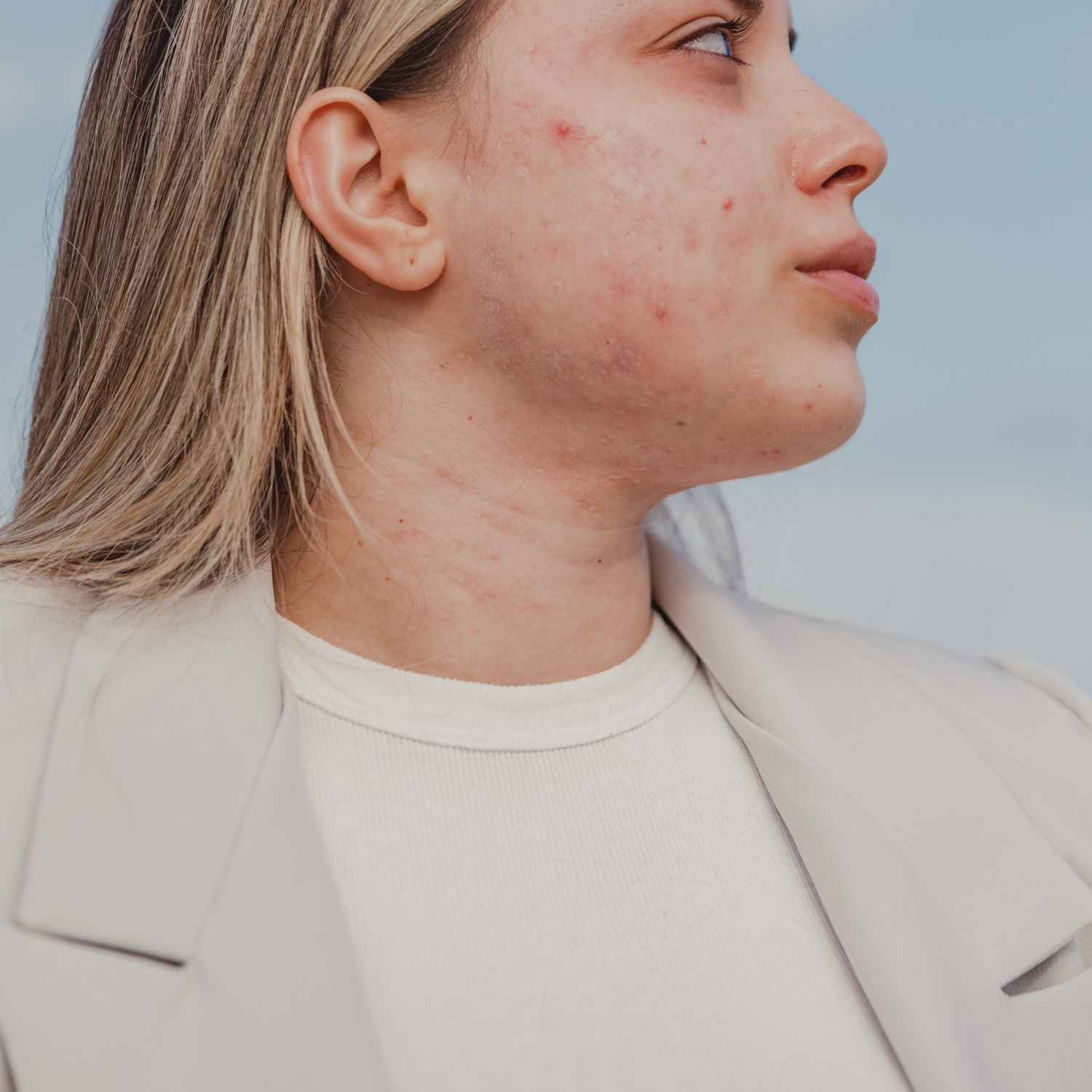
- Jawline and neck: Especially typical for hormonal pimples on the chin and neck in women over 30.
- Lower cheeks: Deep-seated inflammation that can spread over a larger area.
Hormonal Pimples vs. Other Causes
Not every pimple around the mouth is hormonally induced. Perioral dermatitis can look similar but has different causes – such as over-treating or cortisone-containing creams. If you are unsure, have your skin checked dermatologically.
Acne Tarda: Acne in Adults Over 40
Acne tarda describes the occurrence of acne in adulthood, typically from the age of 25. Women over 40, in menopause, and beyond are particularly affected. Acne tarda is almost always hormonally induced and affects an estimated one in four women over 25.
Why Acne Over 40 Increases
During perimenopause and menopause, the estrogen level drops while androgens gain influence relatively. This imbalance leads to:
- Increased sebum production despite skin becoming drier overall.
- A weakened skin barrier that becomes more susceptible to inflammation.
- Slower cell renewal, causing pores to clog faster.
Special Features of Acne Tarda
Acne tarda differs in some points from puberty acne:
- Localization: Predominantly in the lower face area (chin, jawline, neck) instead of the entire T-zone.
- Appearance: Fewer blackheads, but deep, inflamed nodules and papules.
- Healing: Slower healing and higher risk of pigment spots and scars.
- Combination with dryness: Impurities often occur simultaneously with dry, sensitive skin patches.
Acne Over 40 Is Not a Rarity
If you struggle with adult acne, you are not alone. Studies show that up to 22 percent of women between 26 and 44 are affected by acne. Pimples at 50, 60, or even 70 are not a rarity either. The cause is almost always the same: hormonal changes influencing sebum flow and inflammation tendency of the skin.
Causes of Hormonal Acne: What Is Behind It?
The skin is a sensitive mirror of your internal balance. Hormonal acne rarely has a single cause – rather, several factors work together.

Androgens: The Main Driver
Androgens like testosterone are the main triggers of hormonal acne. An increased androgen level – whether absolute or relative to estrogen – causes sebaceous glands to produce more oil. The result: clogged pores, bacterial growth, and inflammation. Especially the enzyme 5-alpha-reductase, which converts testosterone into the more potent DHT (dihydrotestosterone), plays a central role.
Estrogen and Progesterone Fluctuations
Estrogen acts as a natural antagonist to androgens and keeps sebum production in check. When the estrogen level drops – e.g., before menstruation, after stopping the pill, or during menopause – the skin loses this protection. Progesterone can make the skin oilier and weaken the barrier.
Stress Hormones (Cortisol)
Chronic stress activates the adrenal cortex and leads to increased cortisol release. Cortisol indirectly increases androgen production and promotes inflammatory processes in the skin. Many affected individuals report that their hormonal pimples worsen significantly during stressful phases.
Nutrition and Insulin Level
A diet high in sugar, white flour, and dairy products causes the insulin level to rise quickly. Increased insulin, in turn, stimulates androgen production and promotes sebum formation. Studies prove a clear link between high glycemic foods and the development of acne.
Genetic Predisposition
If your mother or sister struggled with late-onset acne as adults, the probability is high that you are susceptible as well. The predisposition to overactive sebaceous glands and sensitive hormone receptors is hereditary.
Lifestyle Factors
Sleep deprivation, lack of exercise, smoking, and environmental burdens (fine dust, exhaust fumes) strain the skin additionally. Without sufficient regeneration, the skin cannot break down pollutants and reacts with clogged pores and inflammation.
Treating Hormonal Acne: The Holistic Approach
To treat hormonal acne successfully, you need a strategy that considers care, nutrition, and hormonal balance simultaneously. External treatment alone rarely helps with hormonal pimples. Here is your roadmap in three steps.

Step 1: The Right Skincare Routine
For hormonal acne, less is often more. Excessive care can weaken the skin barrier and worsen impurities. Instead, rely on a minimalist but targeted routine:
Cleansing (morning and evening): A mild, pH-skin-neutral cleanser dissolves excess sebum without attacking the natural protective barrier. Avoid aggressive foams or soaps. Always remove makeup before actual cleansing.
Chemical Peel (1-2x per week):
- AHA (glycolic acid): Loosens dead skin cells on the surface.
- BHA (salicylic acid): Penetrates pores and frees them from within – ideal for hormonal acne.
Serum with Targeted Active Ingredients:
- Niacinamide (Vitamin B3): Regulates sebum production, strengthens the skin barrier, and reduces redness.
- Azelaic acid: Has an anti-inflammatory and brightening effect on pigment spots after pimples.
- Retinol/Retinoids: Promote cell renewal, clear pores, and soften fine lines. Apply only at night and increase slowly.
Moisture: Even impure skin needs moisture. Light, non-comedogenic formulations with hyaluronic acid prevent the skin from entering "compensation mode" and producing even more sebum.
Sun protection (daily): UV radiation promotes inflammation and increases the formation of pigment spots after pimples. A light, non-comedogenic SPF 30-50 is indispensable.
Step 2: Optimizing Nutrition and Lifestyle
Your skin is regenerated not only from the outside. What you eat, how you sleep, and how you deal with stress directly influences your hormonal system.
Anti-inflammatory nutrition:
- Reduce sugar, white flour, and dairy products – they drive insulin levels up and promote androgens.
- Rely on omega-3 fatty acids (salmon, mackerel, flaxseeds, chia seeds) – they have anti-inflammatory effects.
- Plenty of fresh vegetables, whole-grain products, and antioxidants (berries, green tea, turmeric).
- At least 1.5 to 2 liters of water or unsweetened herbal teas per day.
Stress management:
- Daily mini-breaks: 5-10 minutes of breathing exercises, meditation, or conscious stretching.
- Regular exercise: Walks, yoga, or light endurance training lower cortisol levels.
Sleep and regeneration:
- 7-8 hours of sleep per night are essential for skin regeneration.
- Fixed sleep times and screen abstinence one hour before falling asleep.

Step 3: Supporting Hormonal Balance
If care and lifestyle alone are not sufficient, medical supervision can be useful.
Have hormone status checked:
- Gynecological examination with blood count and ultrasound.
- Exclusion of PCOS, thyroid disorders, and adrenal problems.
Medical options:
- Combination preparations (the pill) that lower androgen levels.
- Spironolactone as anti-androgen therapy for women who do not want to take the pill.
- Topical retinoids on prescription for severe hormonal acne.
Natural support:
- Chaste tree (Vitex agnus-castus): Supports cycle regulation and can alleviate premenstrual pimples.
- Evening primrose oil: Provides gamma-linolenic acid for a healthy skin barrier.
- Phytoestrogens (e.g., soy isoflavones): Can partially compensate for declining estrogens during menopause.
- Ceramides and panthenol: To soothe and regenerate the often dry adult skin.
What to Do Against Hormonal Pimples? Quick Help and Long-term Strategies
You want to know what you can do immediately against hormonal acne? Here is the short version – divided into emergency help and long-term measures.
Emergency Help for Acute Hormonal Pimples
- Don't squeeze! As tempting as it is – squeezing worsens inflammation and leaves scars.
- Spot treatment: Apply azelaic acid or a BHA serum directly to the pimple.
- Cooling: A cool, clean washcloth on the inflamed area alleviates swelling.
- Hydrocolloid patches: Absorb secretion and protect the pimple from bacteria.
Long-term Strategy: What to Do About Hormonal Acne?
- Establish a skincare routine: Consistently follow the steps described above morning and night.
- Adjust nutrition: Less sugar and dairy, more omega-3 and antioxidants.
- Reduce stress: Regular exercise and relaxation techniques.
- Medical clarification: Have hormone status checked if no improvement occurs after 3 months.
- Have patience: Hormonal acne takes time. Expect at least 8-12 weeks for a new routine to take effect.
Frequent Mistakes in Treating Hormonal Acne
- Too many products simultaneously: Overwhelms the skin and can destroy the barrier.
- Aggressive cleansing: Harsh scrubbing or alcohol-containing products dry out the skin and promote rebound impurities.
- Impatience: Active ingredients like retinol take weeks to work. Sticking with it pays off.
- Forgetting sun protection: Without UV protection, dark spots form after every pimple, remaining visible for months.
Your Path to Clear Skin: Summary
Hormonal acne does not have to be your constant companion. Whether you fight with hormonal pimples on the chin, can't get rid of pimples around the mouth, or are confronted with acne tarda as an adult – you can actively do something about it.
The most important points at a glance:
- Recognize hormonal acne: Cyclic impurities, preferentially on the chin and mouth, painful nodules under the skin.
- Understand causes: Androgens, estrogen fluctuations, stress, nutrition, and genetics work together.
- Treat holistically: Gentle care, anti-inflammatory nutrition, and if necessary medical support.
- Have patience: Your skin texture will improve step by step if you consistently stick to your routine.
You are not alone with hormonal acne. Give your skin the care it deserves – minimalist, effective, and tailored to your needs. Your path to clear, radiant skin begins today.