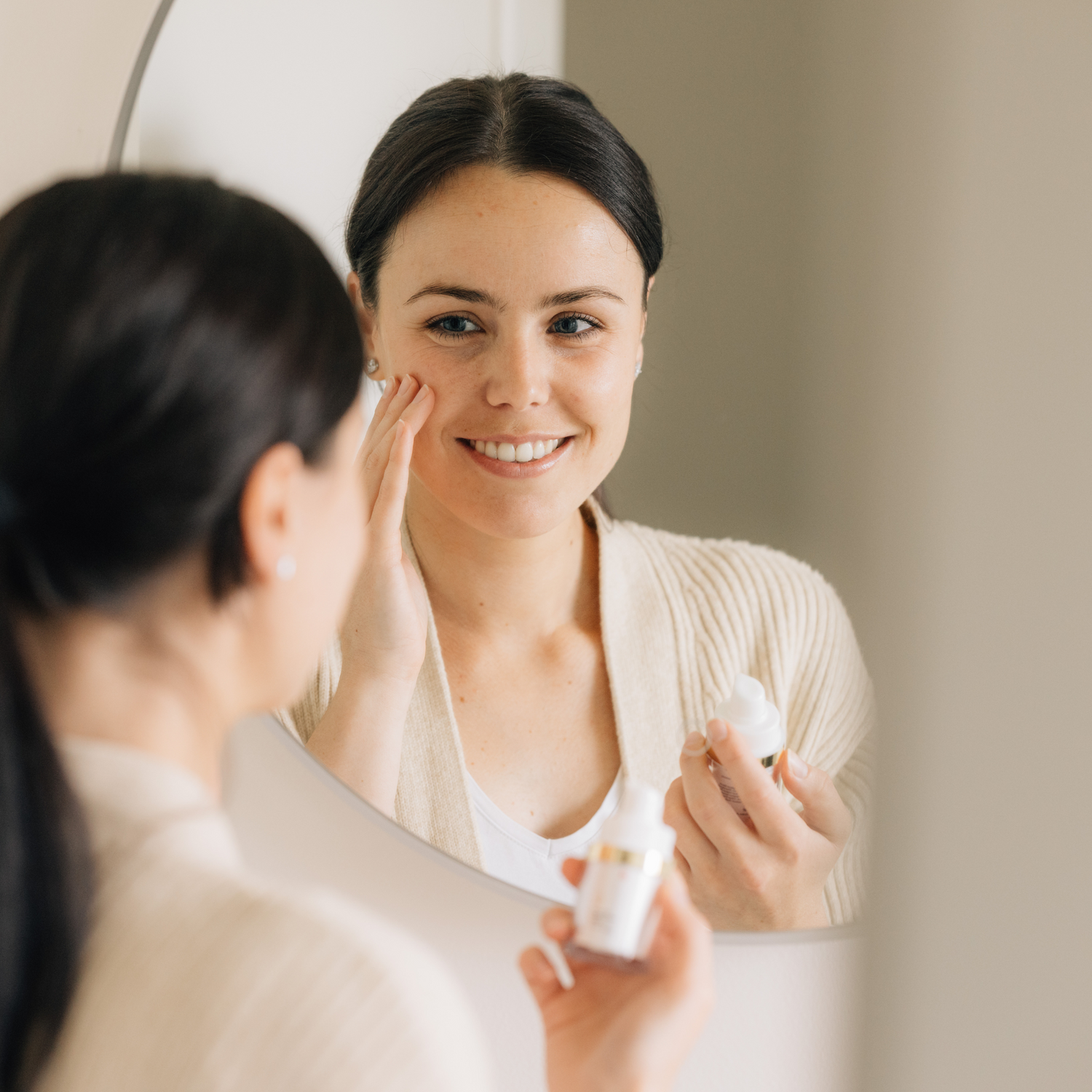
You stand in front of the mirror, examining your face closely – and suddenly discover a fine line at the corner of your eye. Immediately, the question shoots through your head: When do you get wrinkles? And right after that: When does skin actually become mature? When does anti-aging pay off? These questions occupy millions of people – and the answers are less frightening than you think. Because wrinkles are not a sudden event, but the result of a long biological process that you can actively influence. In this article, you will learn everything about the formation of wrinkles, when mature skin begins, and how you can improve your skin texture long-term with the right anti-aging care.
When Do You Get Wrinkles?
The question "When do you get wrinkles?" cannot be answered with a single number – because the process begins insidiously and depends on many factors.
Mid-20s: The Silent Turning Point
Already by the mid-20s, the body's own collagen production decreases – according to studies, by about one percent per year. At the same time, the hyaluronic acid level drops, which means your skin can retain less moisture. The first fine lines usually arise as expression lines around the eyes (crow's feet) and around the mouth – also affectionately called laugh lines. These lines are initially visible only during movement and still disappear completely at rest.
From 30: Wrinkles Become More Visible
In your early 30s, the skin increasingly loses elasticity. The expression lines that smoothed out before now remain visible even in a relaxed state. The first static wrinkles – such as the nasolabial fold or fine forehead lines – can show up. When wrinkles really become noticeable depends heavily on your lifestyle and your genetics.
From 40: Volume Loss and Deeper Wrinkles
From the age of 40, collagen and elastin breakdown accelerates noticeably. The skin loses volume, contours become softer, and deeper wrinkles like marionette lines or contour wrinkles can form. Now, the question "When to start anti-aging?" becomes particularly relevant.
Which Factors Accelerate Wrinkles?
Whether you already have pronounced crow's feet at thirty or zart lines only at fifty depends on an interplay of several factors:
- UV radiation is considered the biggest external driver – experts estimate its share of premature skin aging to be up to 80 percent.
- Smoking constricts blood vessels, reduces oxygen supply, and activates collagen-degrading enzymes. Smokers look on average 10 years older.
- Lack of sleep and chronic stress increase free radicals that attack the collagen framework.
- Sugar-rich diet promotes glycation: collagen fibers become stiff and the skin loses resilience.
- Skin type: Dry skin shows wrinkles faster than oily skin because fewer lipids are available as a natural protective film.

Recognizing Mature Skin: The First Signs
Many ask themselves: When does skin become mature? The term "mature skin" does not describe a fixed point in time, but a skin condition that typically occurs between 40 and 50 years of age. But here, too, there are large individual differences – some notice the first signs of mature skin as early as 35, for others they show only at 55.
Typical Signs of Mature Skin
This is how you recognize whether you already have mature skin:
- Loss of resilience: The skin feels less firm and bounces back more slowly under pressure.
- Dryness: Sebum production decreases, the skin becomes drier and may feel tight.
- Visible wrinkles: Not just expression lines, but also static wrinkles and contour wrinkles are permanently visible.
- Volume loss: The cheeks appear flatter, the face loses fullness.
- Pigment changes: Age spots and an uneven complexion occur more frequently.
- Thinner skin: The skin becomes thinner and more sensitive overall.
- Slower regeneration: Small wounds or blemishes heal more slowly.
Mature Skin from When? – The Hormone Factor
Especially in women, hormonal adjustment plays a decisive role. During menopause, the estrogen level drops significantly – and estrogen is an important factor for collagen production and moisture retention in the skin. Therefore, many women between 45 and 55 experience accelerated skin aging. Mature skin from when? is therefore also a question of hormones.
The Most Important Types of Wrinkles at a Glance
Not every wrinkle is the same – and if you know which type of wrinkle you have, you can specifically adapt your care.
Expression (Dynamic) Wrinkles
Laugh lines, crow's feet, and the frown line arise from thousands of muscle movements a day. From the mid-20s, the skin increasingly lacks collagen and elastin, so the lines dig in and remain visible even at rest. Countermeasures: peptides, Spilanthol, plenty of moisture, and gentle facial massages.
Static Wrinkles
Nasolabial, marionette, or horizontal forehead wrinkles are visible regardless of active expression. They arise through loss of skin volume and the effect of gravity. Plumping hyaluronic acid, collagen peptides, and targeted facial exercises help here.
Gravity Wrinkles
Gravity pulls entire sections downward – typical are sagging cheeks or a double chin. Firming serums with Centella Asiatica or peptides and consistent UVA protection are particularly effective here.
UV Wrinkles (Actinic Wrinkles)
Fine net wrinkles on the forehead, cheeks, and décolleté arise from chronic sun exposure. Sun protection with at least SPF 30 combined with antioxidants like Vitamin C and E is indispensable here.
Sleep Wrinkles
Those who prefer to sleep on their side or stomach press the same wrinkles into the skin night after night. Back-sleeping pillows, silk bedding, and a moisturizing night cream reduce the risk.
Collagen, Elastin & Hyaluronic Acid – The Three Pillars of Young Skin
To understand when wrinkles arise and how to combat them, you must know the three most important building blocks of your skin:
- Collagen provides firmness and structure – with loss, skin areas sag and wrinkles deepen.
- Elastin acts like a rubber band – without elastin, the tissue does not spring back into its original form after movement.
- Hyaluronic Acid binds a multiple of its weight in water. If its level drops, your face loses freshness and plumping.
Beyond a certain point, your body can no longer compensate for the loss of these three building blocks alone. Then the targeted use of anti-aging products pays off.

When to Start Anti-Aging Care? The Right Time
One of the most frequent questions is: When to start anti-aging? And associated with it: When to use anti-aging cream? The answer depends on your age and skin condition.
When Is an Anti-Wrinkle Cream Meaningful?
Dermatologists recommend using a mix of moisture, antioxidants, and UV protection at the latest from 25. This is not excessive caution, but targeted wrinkle prevention – because collagen breakdown begins exactly at this age.
When to use anti-aging cream in a narrower sense? Products with active anti-aging ingredients like retinol, vitamin C, or peptides pay off from early 30s, when the first lasting fine lines become visible.
Your Anti-Aging Roadmap by Age
| Age | Recommended Care |
|---|---|
| From 20 | Sun protection (SPF 30+), light moisturizer, gentle cleansing |
| From 25 | Additionally: antioxidants (Vitamin C), hyaluronic acid |
| From 30 | Additionally: retinol, peptides, targeted eye care |
| From 40 | Additionally: collagen peptides (internally & externally), richer creams |
| From 50 | Combination of topical anti-aging products and nutrient boosters for mature skin |
Rule of thumb: The earlier you start prevention, the less you have to "repair" later. When to use anti-wrinkle cream makes sense is therefore not an age question – but a question of prevention.
The Right Care for Mature Skin
If you already have mature skin, you need a care routine that specifically addresses the needs of your skin. Here are the most effective strategies:
Strong Antioxidants as a Protective Shield
Vitamin C serums (10–20%) neutralize free radicals, brighten pigment spots, and stimulate pro-collagen synthesis. Apply the serum in the morning directly under your sunscreen. Supplement from within with polyphenol-rich foods like berries, green tea, and dark chocolate.
Hyaluronic Acid Booster for Instantly Visible Volume
Short-chain hyaluronic acid molecules penetrate deeper into the skin and bind moisture there. Long-chain molecules lie like a film on the skin surface. Together, this results in the famous "plumping effect." Apply a few drops morning and night before the cream – especially in the eye area and around the mouth.
Retinol – The Gold Standard in Anti-Aging
Retinol (Vitamin A) stimulates cell renewal, boosts collagen production, and smooths fine lines. Start with a low concentration (0.3%) and increase slowly. Important: always use retinol at night and apply consistent sun protection during the day.
Facial Massage and Face Yoga
Gentle upward movements stimulate microcirculation and lymphatic drainage – like a natural lift. Combine five minutes of daily massage with face yoga exercises (e.g., "Cheek Lifter") to specifically strengthen cheek and forehead muscles.
Nutrition for Firm Skin from Within
Collagen is built from the amino acids glycine, proline, and hydroxyproline. Fish, legumes, bone broth, or collagen peptides provide the necessary supply. Omega-3 fatty acids (e.g., from flaxseed or algae oil) have anti-inflammatory effects and strengthen the skin barrier.
Sleep and Stress Management
Chronic stress causes cortisol levels to rise – and cortisol inhibits collagen formation. Incorporate 10 minutes of meditation or slow breathing daily. Aim for 7–8 hours of sleep: in deep sleep, your body releases increased growth hormones that repair your skin cells.
Live Smoke-Free
Nicotine constricts blood vessels and activates collagen-degrading enzymes. Already four weeks after quitting smoking, complexion and skin moisture improve visibly.

Frequently Asked Questions
When do you get the first wrinkles? The first fine expression lines can appear as early as mid-20s. Visible, lasting wrinkles appear in most people from early to mid-30s – depending on lifestyle and genetics.
When does skin become mature? Mature skin is typically spoken of from 40 to 50 years of age. Signs are loss of resilience, dryness, visible wrinkles, volume loss, and pigment changes.
When should you use anti-aging cream? Preventive care with moisture and sun protection is worthwhile from 20. Targeted anti-aging ingredients like retinol or vitamin C are sensible from 25 to 30.
Can you reverse wrinkles? Existing deep wrinkles cannot be fully reversed, but can be significantly softened with the right care. Fine lines can be visibly smoothed by hyaluronic acid and retinol.