
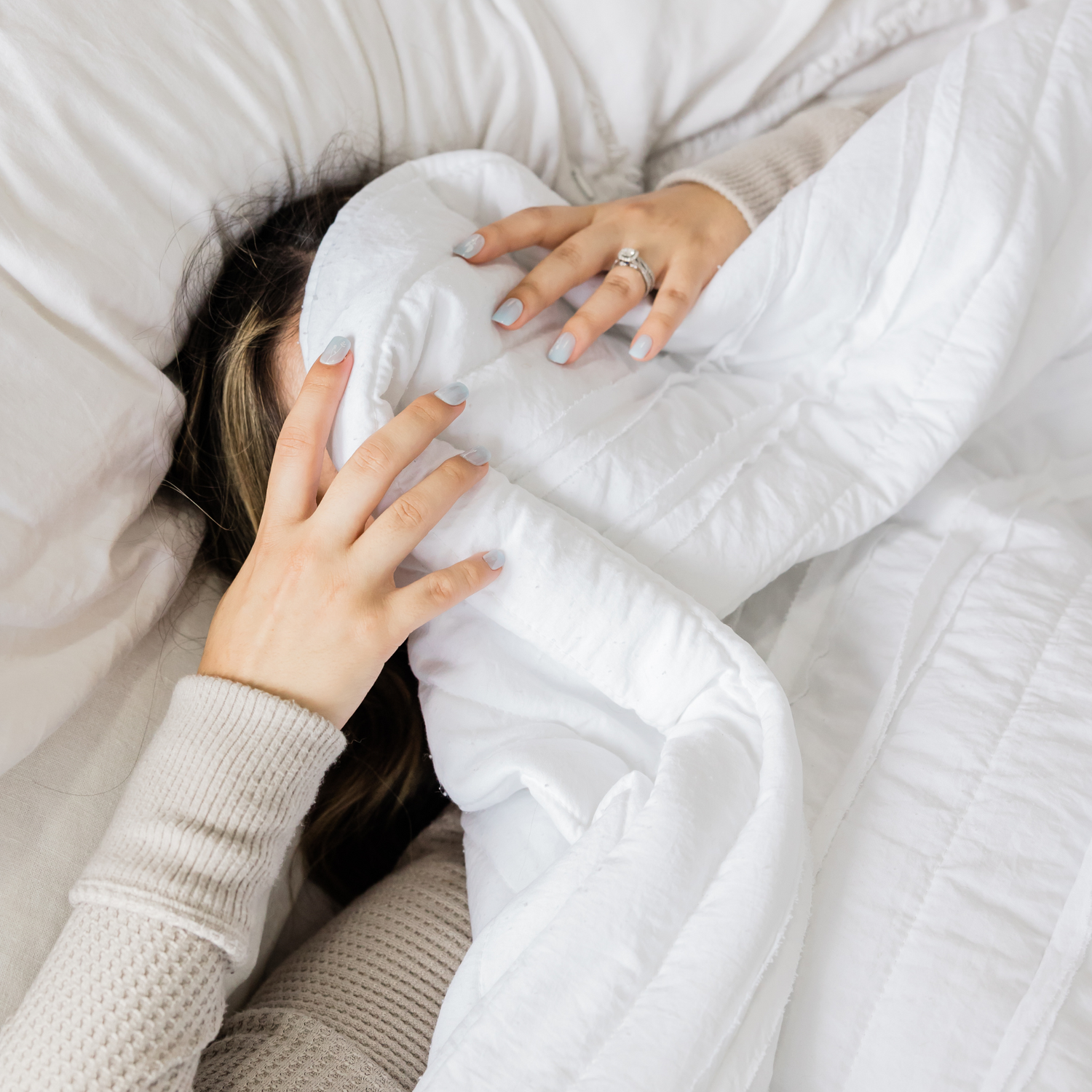
Maybe you know this all too well: you fall into bed dead tired, looking forward to deep night's rest, but between two and four in the morning, a violent awakening suddenly tears you from your dream. Sometimes your heart beats faster, sometimes sweat is on your forehead, sometimes a carousel of thoughts swirls in the dark. In the morning the sobering conclusion: "I can fall asleep but not sleep through – menopause, again!"
You are not alone. Sleep problems during menopause affect about 40 to 60 percent of all women between 45 and 55 years old. The consequences extend far beyond fatigue: your skin loses the most valuable regeneration time overnight, your immune system weakens, and your mood shifts. But there are effective ways to sleep through the night better – without having to resort to tablets immediately.
This article shows you why hormonal change messes up your sleep so much and what really helps with sleep disorders during menopause – with concrete tips you can implement as early as tonight.
Sleep Problems During Menopause: Why Hormones Control Your Sleep
With the beginning of perimenopause, the levels of estrogen and progesterone decrease gradually. These two hormones are far more than fertility messengers – they directly regulate your sleep-wake rhythm:
- Progesterone acts like a body's own tranquilizer. It promotes the production of GABA, a neurotransmitter that shuts down your nervous system. If the progesterone level drops, this natural sleep turbo is missing.
- Estrogen influences melatonin production and temperature regulation. If the estrogen level fluctuates, your nocturnal body temperature also fluctuates – hot flashes and sweating are the consequence.
- Cortisol, the stress hormone, remains elevated longer in the evening with hormonal imbalance. Your body remains in a state of alarm, even though you actually want to sleep.
The result: you can fall asleep because fatigue is great enough – but sleeping through during menopause becomes a real challenge. The nocturnal waking between two and four in the morning is not a coincidence: in this phase, your body switches between deep sleep and REM phases, and it is precisely here that hormonal fluctuations intervene most strongly.
Typical Signs: How to Recognize Hormonally Induced Sleep Disorders
Not every bad night is immediately a menopausal symptom. The following signals suggest that your sleep problems are hormonally driven:
- You wake up regularly between 2 and 4 AM and cannot fall asleep again.
- Sweating or hot flashes tear you out of sleep.
- You do not feel rested in the morning despite sufficient sleep time.
- During the day, you are unusually irritable, forgetful, or listless.
- Your skin appears dull, dry, and shows more wrinkles than usual.
- You suffer from restless legs or inner restlessness in bed.
If you recognize several of these symptoms, menopausal hormonal changes are very likely behind them. The good news: there are effective strategies against each of these symptoms.
What Helps with Sleep Disorders During Menopause? 7 Proven Strategies
Following practical tip in advance: first choose only one strategy, try it consistently for a week, and note the changes. Then add the next one. This way you will clearly recognize what really helps with your personal sleep problems.
1. Sleep Hygiene – The Foundation for Better Sleeping Through
A cool, darkened bedroom (ideal: 16 to 18 °C) acts like a natural calming tea for your nervous system. Especially if hot flashes wake you up at night, room temperature is decisive.
Your checklist for tonight:
- Cool bedroom to 16–18 °C, use light cotton bed linen.
- Darken the room completely (blackout curtains or sleep mask).
- Go to bed at the same time every evening – even on weekends.
- Introduce a 10-minute bedtime ritual: quiet reading, writing a journal, or a cup of herbal tea.
- Ban the smartphone from the bedroom starting at 9 PM.
2. Stress Management – Specifically Lowering Cortisol in the Evening
If cortisol remains too high in the evening, the best pillows won't help. These techniques measurably lower your stress level:
- 4-7-8 breathing technique: Inhale for 4 seconds, hold for 7 seconds, exhale for 8 seconds. Three to four rounds are enough to activate the parasympathetic nervous system.
- Body scan meditation: 5 minutes are enough. Free apps like Insight Timer offer guided exercises.
- Gratitude journal: Write down three things you are grateful for today before sleeping. This steers the carousel of thoughts in a positive direction.
- Micro-breaks during the day: Two deep breaths before every phone call, a two-minute look into the greenery between meetings. The lower your cortisol level in the evening, the more stable your deep sleep will be.
3. Exercise at the Right Time of Day
Exercise is one of the most effective means against sleep problems during menopause – but the time of day decides:
- Morning: Moderate endurance (30 minutes of walking, light jogging) builds up natural sleep pressure.
- Afternoon to 7 PM: Strength training strengthens bones and muscles, which degrade increasingly during menopause.
- Evening: A gentle Yin Yoga stretching (15 minutes) acts like a physical dimmer and facilitates the transition into the resting phase.
Important: Avoid intense training after 7 PM. The increased heart rate and body temperature additionally complicate falling asleep.
4. Slumber Kitchen – Foods That Promote Sleeping Through
The right nutrition in the evening can perceptibly improve your sleeping through during menopause. Rely on tryptophan-rich foods – tryptophan is the precursor to serotonin and melatonin:
- Ideal: Oatmeal with banana and almonds, roasted turkey on brown rice, lukewarm lentil salad.
- Sleep snack: Sour cherries contain natural melatonin. A small cup of natural yogurt with a teaspoon of honey calms the nervous system thanks to calcium and glucose.
- Herbal support: Passionflower and valerian have a slightly relaxing effect, lavender calms the mental cinema. A lukewarm lavender milk drink one hour before sleep is a proven evening ritual.
Avoid: Large fat or sugar bombs in the evening. They keep digestion on their toes and send blood sugar on a roller coaster – the classic recipe for nocturnal waking.
5. Light Management – Using the Day for the Night
Your inner clock adjusts to amounts of light. You can use this specifically:
- Morning: Go out into daylight immediately after waking up (at least 15 minutes). This sets your inner clock and promotes melatonin production in the evening.
- Evening: Dim artificial brightness from 8 PM. Blue light filter glasses or night mode on the screen help.
- Smart lighting: A "sunset simulation" via smart light bulb boosts melatonin production in time.
- Power nap: If you need a mini-siesta in the afternoon, keep it under 25 minutes. Longer naps sabotage sleep at night.
6. Technical Helpers and Practical Tools
Sometimes a simple tool makes the difference for a quiet night:
- Weighted blanket (6–8 kg): The gentle pressure simulates a hug and promotes the release of oxytocin.
- White noise device or app: Masks disturbing noises and creates a uniform sound background.
- Cooling pillowcases or mattress covers: A game changer especially with hot flashes.
- Separate duvets: Sounds unromantic, but immediately solves temperature fights between partners.
Try out one tool specifically instead of using everything at the same time. This way you recognize the benefit clearly.
7. Medical Options for Persistent Sleep Disorders
If you cannot sleep through despite all adjustments, talking to experts pays off:
- Hormone replacement therapy (HRT): An individually dosed HRT can smooth extreme hot flashes and improve sleep. Talk to your gynecologist about bioidentical hormones.
- Cognitive behavioral therapy for insomnia (CBT-I): Considered the gold standard for chronic sleep disorders. You learn to break entrenched sleep patterns – often in just 6 to 8 sessions.
- Herbal preparations: Valerian, passionflower, hops, and lemon balm can help complementarily. Discuss dosage and interactions with your doctor.
Important: Prescription sleeping pills should only bridge crises for a short term and never become a permanent solution.

Sleeping Through and Skin Health: Why Sleep Is Your Best Anti-Aging
What many don't know: Sleep problems during menopause directly affect your skin. Between 11 PM and 3 AM, skin renewal runs at full speed:
- Collagen production: In deep sleep, your body releases growth hormones that boost collagen synthesis. Without sufficient deep sleep, skin breaks down faster.
- Cell repair: Damaged skin cells are repaired at night. Anyone who sleeps poorly sees this in a dull complexion, more wrinkles, and dark circles.
- Moisture balance: During sleep, the skin regulates its moisture balance. Lack of sleep worsens skin dryness, which is already increasing during menopause anyway.
Good night care only unfolds its full effect when you actually sleep deeply and restfully. So invest not only in creams and serums but primarily in your sleep – it is your most powerful anti-aging tool.
Myths About Sleeping During Menopause
Let's clear up three persistent myths:
- "A glass of red wine helps with falling asleep." – The opposite is true: alcohol speeds up falling asleep, but chops up deep sleep phases. You wake up more often and feel less rested in the morning.
- "Eight hours of sleep are mandatory." – The optimal sleep window lies between six and nine hours depending on age and predisposition. What counts is not duration, but quality.
- "Hormone replacement therapy is generally dangerous." – An individually adjusted HRT can significantly alleviate menopause symptoms without necessarily increasing the risk of cardiovascular disease. This depends strongly on personal pre-existing conditions and the dosage.
Your 7-Day Plan for Better Sleep During Menopause
Do you want to start immediately? Here is a simple plan:
| Day | Measure |
|---|---|
| Day 1–2 | Cool bedroom (16–18 °C), smartphone out, set fixed bedtime |
| Day 3–4 | Introduce 4-7-8 breathing technique in the evening, herbal tea instead of screen time |
| Day 5–6 | Morning 15 min. daylight, dim light in the evening, test tryptophan-rich dinner |
| Day 7 | Take stock: What helped? Choose next strategy |
Frequently Asked Questions About Sleep Problems During Menopause
I can fall asleep but not sleep through – is this typical for menopause? Yes, this is one of the most frequent symptoms. The declining progesterone level reduces the calming effect on your nervous system, while hot flashes and cortisol surges tear you out of deep sleep. The good news: with targeted measures like sleep hygiene, stress management, and the right nutrition, sleeping through during menopause can be significantly improved.
How long do sleep disorders during menopause last? The duration is individually different. For many women, sleep problems improve after menopause, when the hormone level stabilizes at a new level. This can take two to ten years. The sooner you counteract actively, the better you will master this phase.
Are herbal sleep aids a good alternative? Valerian, passionflower, hops, and lemon balm can help with mild to moderate sleep disorders. Their effect is gentler than with prescription drugs, but they have hardly any side effects. Give herbal preparations at least two to three weeks before you judge their effect.