
Scaly skin on the face is more than a cosmetic problem – it shows you that your skin barrier is weakened. You wake up in the morning and immediately feel how the skin on your cheeks tightens. Small white skin flakes lie like snow on the surface, dry areas on the face feel rough, and no cream seems to help permanently. If you suffer from dry, scaly skin on the face, you are not alone: millions of people struggle with exactly this problem daily. In this article, you will learn why your dry facial skin forms scales, what causes are behind it, and how you can strengthen your skin barrier with the right care and nutrition.
Dry, Scaly Facial Skin: Causes
Before you reach for the next cream, it's worth looking behind the scenes. Because scaly skin on the face rarely arises from a single reason – usually, several factors work together, weakening your skin barrier.
Disturbed Cell Turnover
In your epidermis, new basal cells are constantly being formed. They migrate to the surface within 26 to 28 days, losing water and becoming flat horny cells. Normally, these microscopically small particles detach individually from the skin – so fine that you don't notice them. If this process gets out of balance, the natural "glue" between the horny cells (corneodesmosomes) stays intact for too long. The result: dead cells clump together. Only from about 500 adhering particles does a scale become visible – the typical white snowflake pattern on your facial skin.
Lipid and Water Deficiency
Your skin needs endogenous fats and moisture to maintain its protective film. Crash diets, too few healthy fats in nutrition, or simply drinking too little lead to the hydro-lipid film becoming thinner. The skin barrier loses its function, moisture evaporates faster from the horny cells, and dry, scaly skin on the face is the consequence.
Environmental Stress and Climate
Cold wind in winter, dry heated air, air conditioning in the office, or intense UV radiation in summer – all this deprives your facial skin of moisture. The so-called transepidermal water loss (TEWL) increases, the surface becomes cracked, and dry patches arise on the face that feel rough and scaly.
Hormonal Fluctuations
An underactive thyroid, diabetes, or hormonal fluctuations during puberty, pregnancy, or menopause can alter sebum production. If your body produces less protective skin fat, the skin dries out. With irregular sebum production, dry and oily areas arise simultaneously – a combination that makes care particularly tricky.
Genetic Predisposition and Age
Your genes help determine how thick your skin layers are and how much sebum your body naturally produces. With increasing age, lipid production slows down, cell division becomes sluggish, and dry facial skin with scaling occurs more frequently.
Skin Diseases
Chronic diseases like neurodermatitis, psoriasis, or seborrhoeic dermatitis disturb cell turnover permanently. Inflammation, micro-cracks, and a weakened acid mantle ensure massive scales, redness, and itching. Here you should seek medical advice in addition to consistent basic care.
Recognizing Dry Areas on the Face
Scaly skin on the face does not announce itself only through visible scales. Your skin already sends you warning signals beforehand. The sooner you recognize these, the faster you can counteract them.
Rough, Dull Skin Appearance
If your skin suddenly feels like fine sandpaper and no longer shines, moisture and lipids are missing. Horny cells lie closer to each other, light is reflected unevenly, and fine lines become visible earlier than usual.
Itching and Burning
If your skin barrier gets gaps, water and skin's own fats evaporate faster. Micro-inflammations arise, nerve endings react more sensitively, and you feel a constant tingling or even burning. This feeling is often the first alarm signal before visible scales appear.
Visible Skin Flakes
Do you find fine white particles on dark clothing or your smartphone display? Then horny cells are already clumping into larger accumulations. That is a clear sign that your cell turnover has gotten out of rhythm and your facial skin needs help.
Redness and Spots
If irritants penetrate through the damaged skin layer, your immune system reacts. Redness, irregular spots, or warm, itchy areas point to an incipient inflammation. Especially on cheeks, nose, and forehead, dry areas on the face often appear as reddened patches.
Tightness After Washing
Does your skin pull directly after washing as if it were a size too small? Water and cleansers can further remove the already thin protective film. If this film is gone, you feel the dryness immediately as an unpleasant tightness.
Important: The earlier you take these warning signals seriously, the easier it is to bring your dry facial skin back into balance – before harmless dryness turns into stubborn scaly skin.

The Right Care for Scaly Facial Skin
For dry, scaly skin on the face, a coordinated care routine is decisive. It's not about applying as many products as possible, but about using the right active ingredients in the right order.
Gentle Cleansing Without Drying Out
Refrain from aggressive cleansing gels with sulfates or alcohol. Instead, rely on mild micellar water or gentle cleansing milk that remove dirt and makeup without attacking the natural protective barrier of your skin. Cleanse your face only with lukewarm water – hot water additionally deprives the skin of moisture.
Moisture and Active Ingredients with Serums
After cleansing, your skin needs a moisture boost. Serums with hyaluronic acid bind water in the upper skin layers and plump up fine lines. Vitamin C additionally protects against free radicals and supports collagen formation. Apply the serum to still slightly damp skin – this way it can absorb better.
Relipidating Care as a Protective Shield
Conclude your routine with a rich but non-irritating cream. Look for ingredients like ceramides, shea butter, or squalane – they imitate the natural lipids of your skin and lock in moisture. Products without perfume, alcohol, and essential oils are the best choice for sensitive, scaly skin.
Don't Forget Sun Protection
UV radiation damages the skin barrier and promotes transepidermal water loss. Apply daily sun protection with at least SPF 30 – even in winter and on cloudy days. Mineral filters based on zinc oxide are often better tolerated by sensitive skin.
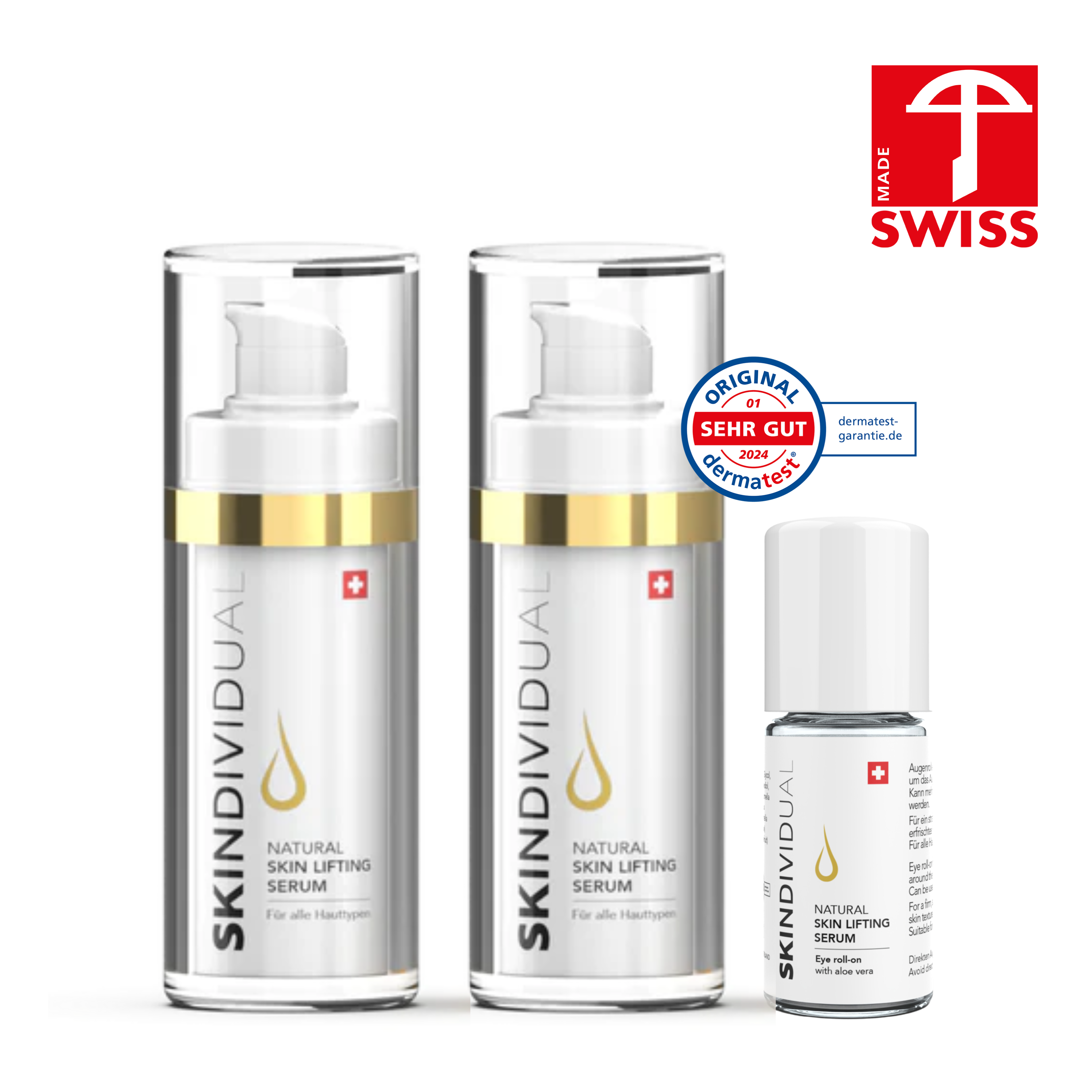
Skindividual Face Care Set – Coordinated Routine for Dry Facial Skin
Especially in the case of dry, scaly skin on the face, a coordinated routine of cleansing, active ingredient serum, and eye care pays off. The Skindividual Face Care Set combines exactly these building blocks:
- Micellar water (200 ml) – removes makeup and dirt thoroughly without drying out the skin barrier.
- Natural Skin Lifting Serum (30 ml) – high-performance concentrate with hyaluron and Spilanthol; diminishes transepidermal water loss and visibly plumps up lines.
- Hyaluron Eye Gel Roll-On – instant freshness for the sensitive eye area, reduces dryness lines, and protects from dry areas on the eyelid edges.
Strengthening Skin Barrier: Nutrition as a Key
Real skincare starts on the plate. If you give your body the right nutrients, your skin barrier can regenerate from within and cell turnover normalizes. Dry, scaly skin on the face then has significantly fewer surfaces of attack.
Build Drinking Routine
Give your skin cells daily sufficient fluid: two to three liters of still water or unsweetened herbal tea. This way cell volume remains stable, metabolic waste products are flushed away, and the skin can store more moisture. That is the simplest protection against tightness and dry areas on the face.
Omega-3 Fatty Acids for the Lipid Film
Fatty fish like salmon or mackerel, a tablespoon of flaxseed or chia seeds in muesli – all this provides essential omega-3 fatty acids. Your skin builds lipids from these for a supple protective film. Result: less water loss, less clumping of horny cells, and less scaly skin.
Antioxidants Against Cell Stress
Colorful vegetables and berries – peppers, raspberries, spinach – are full of Vitamin C and E. These antioxidants neutralize free radicals that arise during UV radiation and environmental stress. Thus, the collagen framework remains elastic and the skin barrier regenerates faster.
Zinc, Copper, and Biotin
Pumpkin seeds, oatmeal, and legumes provide zinc and copper, which accelerate wound healing, form new horny cells, and stabilize sebum production. Biotin from eggs, legumes, and walnuts ensures that the renewal process of the epidermis remains in rhythm. Crack a small handful of seeds daily or sprinkle them over your salad.
Avoid Skin Enemies
Excessive alcohol, refined sugar, trans fats, and heavily salted snacks attack your skin barrier multiple times: they withdraw water, promote inflammation, and weaken the antioxidant protective system. Exchange soft drinks for water with lemon slices and chips for roasted chickpeas – your facial skin will thank you.
Beauty Complex from Skindividual – Nutrients in One Portion
No time for the daily nutrient puzzle? The Beauty Complex combines fish collagen, hyaluronic acid, vitamin C and E, as well as zinc, copper, and biotin in one portion. So you supply your skin daily with everything it needs for regeneration – ideal as support for dry, scaly skin on the face.

Your 3-Step Plan Against Scaly Skin on the Face
- Observe: Where do dry areas show up most strongly on the face? Note symptoms, potential triggers, and how your skin reacts to certain products.
- Optimize nutrition: Integrate omega-3 fatty acids, antioxidants, and minerals into your everyday life. Reduce skin enemies like sugar and alcohol. Supplement if necessary with the Skindividual Beauty Complex.
- Build skincare routine: Gentle cleansing, moisturizing serum, and relipidating cream – ideally coordinated as in the Skindividual Face Care Set. Don't forget daily sun protection.
Frequently Asked Questions About Scaly Skin on the Face
Why do I get scaly skin on the face? The most common causes are a disturbed cell turnover, moisture deficiency, environmental influences, and a weakened skin barrier. Also, hormonal fluctuations or skin diseases like neurodermatitis can cause dry, scaly skin on the face.
When should I see a dermatologist? If your skin continues to itch intensely, hurts, reddens, or scales spread despite good care and nutrition, you should consult a dermatologist. A skin disease requiring treatment can hide behind stubborn scaly skin.
Is only the face and cheeks affected? Not necessarily. Also, scalp, elbows, shins, and other body areas can develop dry, scaly skin. The facial skin, however, is particularly thin and sensitive, which is why scales become visible faster there.
Can I get rid of scaly skin on the face permanently? With the right combination of nutrition, care, and protection against environmental influences, you can significantly reduce dry, scaly skin on the face or even bring it completely under control. Consistency is important: your skin barrier needs time to recover.
Your face tells your story – don't let scaly skin define this story. Give your skin the right nutrients, gentle care, and time for regeneration. Thus, you will soon meet the mirror with a smile again.