You stand in front of the mirror in the morning, run your fingers through your hair – and suddenly hold an entire strand in your hand. Your stomach clenches. Hair loss during menopause affects every third woman over 50, and yet it feels like you're alone with it. The good news: you are not. And there are effective ways to strengthen your hair again. In this guide, you will learn why hair loss in women increases with age, which is the best remedy against hair loss during menopause, and what you can do concretely starting today.
Why Hair Loss During Menopause Is So Common
Every person loses 50 to 100 hairs daily – that is completely normal. But for many women in menopause, this number increases significantly. Hair loss in women over 50 is not a rarity: studies show that up to 40 percent of women in menopause are affected by noticeable hair loss. The frustrating part? The change often creeps in slowly. At first, you notice that the part is getting wider. Then the hair gets thinner overall. And eventually, you ask yourself: Is this still normal – or already hair loss?
The difference is important. If your hair is getting thinner but there is no classic hair loss, dermatologists speak of miniaturization of the hair follicles. The hairs don't necessarily fall out, they just become finer, weaker, and shorter. This too is a typical sign of hormonal adjustment – and you can do something about this as well.
The Causes: What Happens Hormonally During Menopause?
Behind hair loss in women during menopause lies a complex interplay of several factors. If you understand the causes, you can specifically counteract them.
Estrogen Deficiency and the Role of DHT
During menopause, your estrogen level drops continuously. Estrogen acts like a protective shield for your hair follicles – it extends the growth phase (anagen phase) and keeps the hair strong. Once this protection falls away, the male hormone dihydrotestosterone (DHT) gains the upper hand. DHT shortens the growth phase of the hair follicles and causes them to shrink. The result: thinner, shorter hair, and finally visible hair loss.
Thyroid and Iron Deficiency
Not every hair loss in women over 50 is purely hormonally driven. An underactive thyroid – which occurs more frequently especially in menopause – can trigger diffuse hair loss. Likewise, iron deficiency, from which many women over 50 suffer, leads to undersupply of the hair roots. A blood count at the doctor's quickly brings clarity here.
Stress and Lifestyle
Chronic stress releases cortisol, which shortens the growth phase of your hair. At the same time, sleep patterns and dietary habits often change during menopause. All of this additionally strains the hair roots. Hair loss in women over 50 therefore rarely has only one cause – usually, several factors work together.
Genetic Predisposition
If your mother or grandmother also suffered from thinning hair during menopause, it is more likely that it will affect you as well. Androgenetic alopecia – hereditary hair loss – does not only affect men, but is also the most common form of hair loss in women.

Best Remedy Against Hair Loss During Menopause: What Really Works
You have certainly seen dozens of products and tips. But what is actually the best remedy against hair loss during menopause? Here are the approaches that are scientifically best proven – ordered by effectiveness.
Minoxidil – The Gold Standard
Minoxidil is the only topical active ingredient officially approved for treating hair loss in women. The 2 percent solution improves scalp circulation and extends the hair's growth phase. Studies show that about 60 percent of users notice a visible improvement after six months.
How to apply it: Apply the solution twice daily to the dry scalp. Have patience – initial results appear no earlier than after three months. In the first few weeks, increased hair loss can even occur (shedding phase), which is a sign that new, stronger hairs are regrowing.
Phytoestrogens and Plant-Based Active Ingredients
For women looking for a gentler alternative, phytoestrogen-containing products are an option. Isoflavones from red clover or soy act similarly to the body's own estrogen and can protect hair follicles. These agents are particularly suitable if you do not tolerate minoxidil or prefer a more natural approach.
Nutrient Complexes for Hair Growth
Often, the body lacks exactly the building blocks your hair needs for healthy growth during menopause. As a remedy against hair loss in women over 50, dietary supplements with the following ingredients have proven themselves:
- Biotin (Vitamin B7): Supports keratin production, the main component of your hair.
- Zinc and Copper: Essential for cell division in the hair matrix.
- Iron and Vitamin C: Iron supplies the hair roots with oxygen, Vitamin C improves absorption.
- Collagen and Hyaluronic Acid: Strengthen the scalp structure and improve hair anchoring.
- Millet extract: Provides silicic acid and amino acids that strengthen hair from within.
Hormone Replacement Therapy (HRT)
In some cases, medically supervised hormone replacement therapy can significantly improve hair loss during menopause. By supplementing estrogen, the hormonal protective shield is partially restored. Discuss this option with your gynecologist – it is not suitable for every woman, but can be very effective for strong hormonally driven hair loss.
Hair Getting Thinner But No Hair Loss – What to Do?
Maybe you recognize yourself here: your hair is not falling out in clumps, but it has clearly lost fullness and strength. Hair is getting thinner but no hair loss – this is extremely common in women during menopause and yet distressing.
Volume Care with System
Rely on shampoos and conditioners with caffeine, biotin, or keratin. Caffeine shampoos stimulate hair roots directly and can extend the growth phase. Avoid heavy silicones that make fine hair look even flatter.
Scalp Care as a Foundation
A healthy scalp is the foundation for strong hair. Use a mild scalp peeling once a week to remove sebum deposits and product residue. Regular scalp massages – three to five minutes daily – stimulate circulation and improve nutrient supply to the follicles.
Styling Tricks for More Fullness
- Dry your hair upside down to generate root volume.
- Use volumizing powder or spray at the roots.
- Refrain from too tight braids or buns that pull on the hair (traction alopecia).
- A layered haircut makes fine hair appear fuller.
Beautiful Hair During Menopause: Natural Home Remedies
Besides medical products, there are proven home remedies that support your hair health. They do not replace therapy for severe hair loss, but can perceptibly improve hair health.
Rosemary Oil Intensive Treatment
Rosemary oil is one of the most researched natural agents for hair health. A 2015 study showed that rosemary oil was similarly effective to 2 percent minoxidil after six months.
Application: Mix 3 to 4 drops of rosemary essential oil with a tablespoon of jojoba oil. Massage the mixture gently into the scalp and leave on overnight. Wash out in the morning with a mild shampoo. Perform an allergy test on the crook of your arm beforehand.
Aloe Vera Scalp Mask
Aloe vera cools irritated scalp and supplies polysaccharides that promote hair root regeneration.
Recipe: Mix 2 tbsp aloe vera gel, 1 tsp honey, and 1 tsp coconut oil. Leave on for 20 minutes and rinse lukewarm.
Nettle Tea for Hair
Nettle tea contains silicic acid and iron – both important for hair growth. Drink two cups daily and use cooled nettle tea as a rinse after washing hair. Do not rinse the brew – it strengthens hair structure.
Cool Finish and Silk Pillowcase
- Cold water after washing closes the cuticle and ensures more shine.
- A silk pillowcase reduces friction at night, keeps sebum in the hair longer, and prevents knots.

Nutrition for Hair Loss During Menopause
What you eat has a direct influence on your hair health. Especially for hair loss in women over 50, nutrition plays a central role because the nutrient requirement changes during menopause.
The Most Important Nutrients for Your Hair
| Nutrient | Effect for Hair | Best Sources |
|---|---|---|
| Protein | Builds keratin | Legumes, fish, eggs |
| Iron | Oxygen transport to hair root | Lentils, spinach, pumpkin seeds |
| Zinc | Cell division and hair growth | Oatmeal, nuts, seeds |
| Omega-3 | Scalp circulation | Salmon, flaxseeds, walnuts |
| Biotin | Keratin production | Eggs, almonds, sweet potatoes |
| Vitamin D | Follicle health | Fatty fish, sunlight, mushrooms |
Practical tip: Have a handful of protein with every meal and combine it with colorful raw vegetables for antioxidants. Just 2 grams of omega-3 fatty acids daily can measurably increase scalp circulation.
Stress Management: The Underestimated Factor in Hair Loss Women Over 50
Chronic stress is one of the biggest enemies of your hair – and particularly treacherous during menopause because hormonal fluctuations intensify the stress response.
Everyday Anti-Stress Strategies
- Breathing exercises: 10 minutes of conscious abdominal breathing in the evening measurably lower cortisol levels.
- Moderate exercise: 30 minutes of walking, yoga, or swimming daily improves circulation – including the scalp.
- Sleep hygiene: Your hair regenerates at night. Ensure 7 to 8 hours of sleep in a dark, cool room.
- Social contacts: Exchange with other affected women – for example, in online forums or self-help groups – can be an enormous relief.
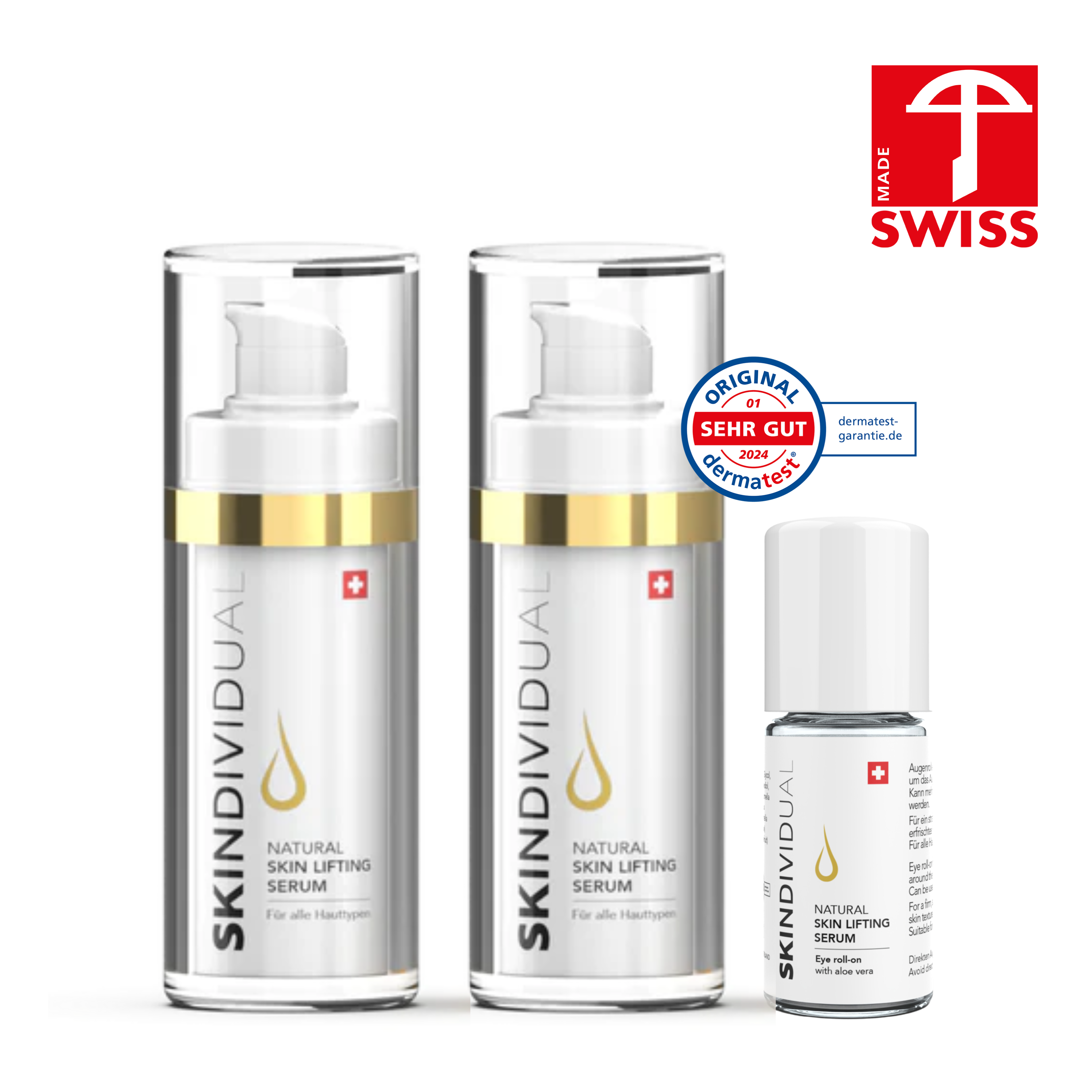
SKINDIVIDUAL Beauty Complex: Holistic Support for Your Hair
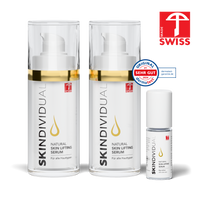
The SKINDIVIDUAL Beauty Complex was developed specifically for women who want to strengthen their hair health from within. The formula combines marine collagen, hyaluronic acid, vitamin C, zinc, copper, and millet extract – exactly the building blocks your hair needs especially during menopause.
What is inside and why:
- Hydrolyzed collagen strengthens the scalp structure and improves the anchoring of hair roots.
- Millet extract provides silicic acid and amino acids for more hair fullness.
- Zinc and copper support cell division in the hair matrix.
- Vitamin C promotes collagen synthesis and improves iron absorption.
According to user feedback, many women report denser hair, less hair loss when brushing, and a stronger hair structure after eight weeks of consistent intake. The 30-day packs are available in the online shop.

When Should You See a Doctor?
Not every hair loss requires immediate medical help. But you should make an appointment in the following situations:
- You lose significantly more than 100 hairs daily over several weeks.
- Bald spots form (indication of alopecia areata).
- Your hair loss is accompanied by itching, redness, or scales.
- You suspect a thyroid disorder or iron deficiency.
A dermatologist can determine the exact cause with a trichogram, blood count, and possibly a scalp biopsy and recommend an individual therapy.
Conclusion: Beautiful Hair During Menopause Is Possible
Hair loss during menopause is widespread – but not an unavoidable fate. If you know the cause, you can specifically act. The best remedy against hair loss during menopause is usually a combination: targeted nutrient supply from within, effective scalp care from without, and a healthy lifestyle as a foundation.
Whether you work with minoxidil, rely on rosemary oil, or optimize your nutrient balance with a complex like the SKINDIVIDUAL Beauty Complex – it is important that you start. Your hair needs time to recover. Give it at least three to six months and stay consistent. The results will motivate you.
Note: This article is for information and does not replace medical advice. If you experience persistent or suddenly severe hair loss, please see a dermatologist.