
Just one look in the mirror is enough, and you hardly recognize yourself: your skin is dull, you have new wrinkles, and your contours are sagging. Could the reason for this really lie in your diet? More specifically: in sugar?
Sugar is ubiquitous. Whether in your morning coffee, a fruit bar in between, or a glass of wine in the evening – it is a fixed part of our everyday life. But what many don't know: sugar is bad for the skin – and significantly more so than just for teeth and waistline. Science has now clearly shown: sugar causes wrinkles, promotes blemishes, and accelerates skin aging.
Welcome to the world of the so-called sugar face. In this article, you will learn what sugar does to the skin, what exactly is behind the glycation of the skin, and how you can help your skin shine again with clever care and conscious nutrition. Because you deserve to feel comfortable in your skin – today, tomorrow, and the day after.
What Does Sugar Do to the Skin? The Process of Glycation Explained
When we consume sugar, our blood sugar level rises. This is a natural process in itself. Problems can occur when too much sugar remains in the blood over a longer period. Then, glycation occurs – the sugar-coating of the skin from within.
Glycation Skin: What Exactly Happens?
During glycation, sugar molecules bind with proteins in the body. This process is not enzymatically controlled, meaning it occurs uncontrollably. Collagen and elastin – the proteins responsible for the firmness and elasticity of our skin – are particularly affected.
From this reaction, Advanced Glycation Endproducts (AGEs) are formed. These AGEs are particularly insidious because they permanently alter the structure of skin proteins:
- Collagen fibers become stiff and break faster.
- Elastin loses its resilience; skin elasticity decreases.
- The AGE deposits accumulate more and more over time.
Why is sugar bad for the skin? The visible consequences:
- Deeper nasolabial folds
- Sunken cheek areas
- Dark circles under the eyes due to weakened capillaries
- A dull-gray skin appearance
The end products deposit like caramelized residues in a clockwork mechanism – an image that Dr. William Danby (Harvard) likes to use.
The Science Behind It
Several studies prove that the concentration of AGEs increases with age – especially in people with high sugar consumption. AGEs not only accelerate structural skin aging but can also promote inflammation that damages the skin barrier. Therefore, dermatology speaks of an endogenous skin stress factor.
Dr. William Danby, a dermatologist at Harvard Medical School, emphasizes:
"AGEs are like residue in a clockwork. They stick to the gears of your skin – and make it age earlier."
Sugar skin aging is thus not a cosmetic peripheral phenomenon, but a well-documented biological process. Anyone who understands what sugar does to the skin can specifically counteract it.
Recognizing Sugar Face: Visible Effects on Your Complexion
A permanently elevated sugar consumption shows not only on the scale or blood count, but also very clearly on the face. Dermatology knows the phenomenon of sugar face – and you can recognize it by typical features.
Typical Features of Sugar Face
- Deepened wrinkles on the forehead and cheeks
- Sagging skin areas around the chin and jawline
- Inflammatory skin changes like redness or acne
- Enlarged pores due to disturbed sebum production
- Pale-gray, lifeless skin appearance
These changes do not occur abruptly but develop over years. All the more treacherous is that they are often attributed to the normal aging process, and the connection with diet is not recognized.

Studies and Dermatologist Voices
A study from the Universiteit Leiden showed that people with high AGE values in their blood had significantly more wrinkles than people with low values – despite being the same age.
Dr. Nigma Talib, a doctor specializing in "facial diagnostic" dermatology, describes four typical facial shapes and links them to specific dietary habits. With the so-called sugar face, the eyes are particularly affected: under-eye bags, dark circles, and sagging eyelids. The chin area is also susceptible to blemishes.
The skin appearance thus acts to some extent as a mirror of your sugar past. The good news: these processes can be influenced.
Acne Through Sugar: Why Sugar Promotes Blemishes and Acne
Besides premature skin aging, there is another widespread problem: acne through sugar. Many people notice that they get more blemishes after consuming sweets, soft drinks, or white flour products – especially sugar pimples on the face.
How Do Sugar Pimples Form on the Face?
The link between sugar and pimples is scientifically well-documented. When you consume sugar, the following happens:
- Insulin surge: Sugar makes your blood sugar and insulin levels rise rapidly.
- Sebum production: Insulin stimulates the release of IGF-1 (Insulin-like Growth Factor), which encourages sebaceous glands to increase production.
- Clogged pores: Excess sebum clogs pores, bacteria multiply, and inflammations arise.
- Inflammation: AGEs additionally promote inflammatory processes in the skin that worsen pimples and acne.
The result: acne through sugar, which occurs particularly frequently on the chin, cheeks, and forehead. If you regularly suffer from blemishes and consume a lot of sugar, changing your diet can often work wonders.
What Helps Against Sugar Pimples?
- Reduce sugar: Less industrial sugar means fewer insulin surges and less excess sebum production.
- Zinc-containing foods: Zinc acts anti-inflammatory and supports skin regeneration.
- Probiotics: A healthy gut flora can reduce skin inflammation.
- Targeted care: Products with niacinamide or salicylic acid help treat existing blemishes.
Stop Glycation of the Skin: Tips from Inside and Outside
Sugar is not an unavoidable fate – you have power over your actions. Even small changes can show a big effect and halt the glycation of the skin.
Nutrition: Less Sugar, More Radiance
1. Conscious Shopping
Many sugar sources hide where you hardly expect them: fruit yogurts, cereal bars, breakfast cereals, salad dressings, or even "fitness bars" often contain high amounts of industrial sugar. Compounding the problem: sugar has many names.
Check the ingredients list for names like:
- Glucose syrup
- Fructose
- Maltodextrin
- Sucrose
- Dextrose
- Invert sugar syrup
Tip: If you check the ingredient list and sugar (under whatever name) is among the first three ingredients, the product is usually highly sugary. A simple rule of thumb: the shorter and more natural the list of ingredients, the better for you – and your skin.
2. Use Natural Sweetness Instead of Industrial Sugar
You don't have to give up sweets – but you can choose more consciously. Natural alternatives often contain additional nutrients, are better tolerated, and do not trigger strong blood sugar fluctuations.
Recommended alternatives:
- Cinnamon: Regulates blood sugar and gives dishes a natural sweetness – e.g., in porridge or over fruit.
- Vanilla extract: Gives yogurt or smoothies a sweet note without any sugar.
- Ripe bananas: Perfect for sweetening pastries, pancakes, or desserts – provide potassium and magnesium.
- Coconut blossom sugar: Has a low glycemic index and contains trace elements like iron and zinc.
- Erythritol & Xylitol: Low-calorie sugar substitutes that are gentle on teeth and do not promote glycation.
3. Anti-Glycation Food: Foods Against the Glycation of the Skin
Certain foods actively work against glycation and oxidative stress – they protect your collagen, promote skin renewal, and make your skin shine.
These foods should regularly land on your plate:
- Berries (blueberries, raspberries, strawberries): Rich in anthocyanins and vitamin C – both strong antioxidants that neutralize free radicals.
- Green tea: Contains catechins that demonstrably inhibit the formation of AGEs (Advanced Glycation Endproducts).
- Broccoli & spinach: Vitamin C promotes the body's own collagen formation, additionally providing iron, folic acid, and chlorophyll.
- Turmeric: The contained curcumin acts strongly anti-inflammatory and can reduce skin irritation – ideally combined with black pepper for better absorption.
4. Beauty Complex from Within
In addition to nutrition, a specifically developed nutrient complex for the skin can help reduce collagen loss and sugar damage. The dietary supplement from SKINDIVIDUAL has been precisely tailored to these needs.
Important ingredients:
- Hydrolyzed collagen: Promotes elasticity and resilience of the skin – especially important for mature or stressed skin.
- Zinc: Supports cell regeneration, acts anti-inflammatory, and helps with impure skin.
- Vitamin C: Indispensable for collagen formation, protects against oxidative stress, and improves skin texture.
- Vitamin E: Lipophilic antioxidant that stabilizes cell membranes and reduces moisture loss of the skin.

Skincare from Outside: Specifically Combatting Sugar Skin
1. Highly Effective Active Ingredients
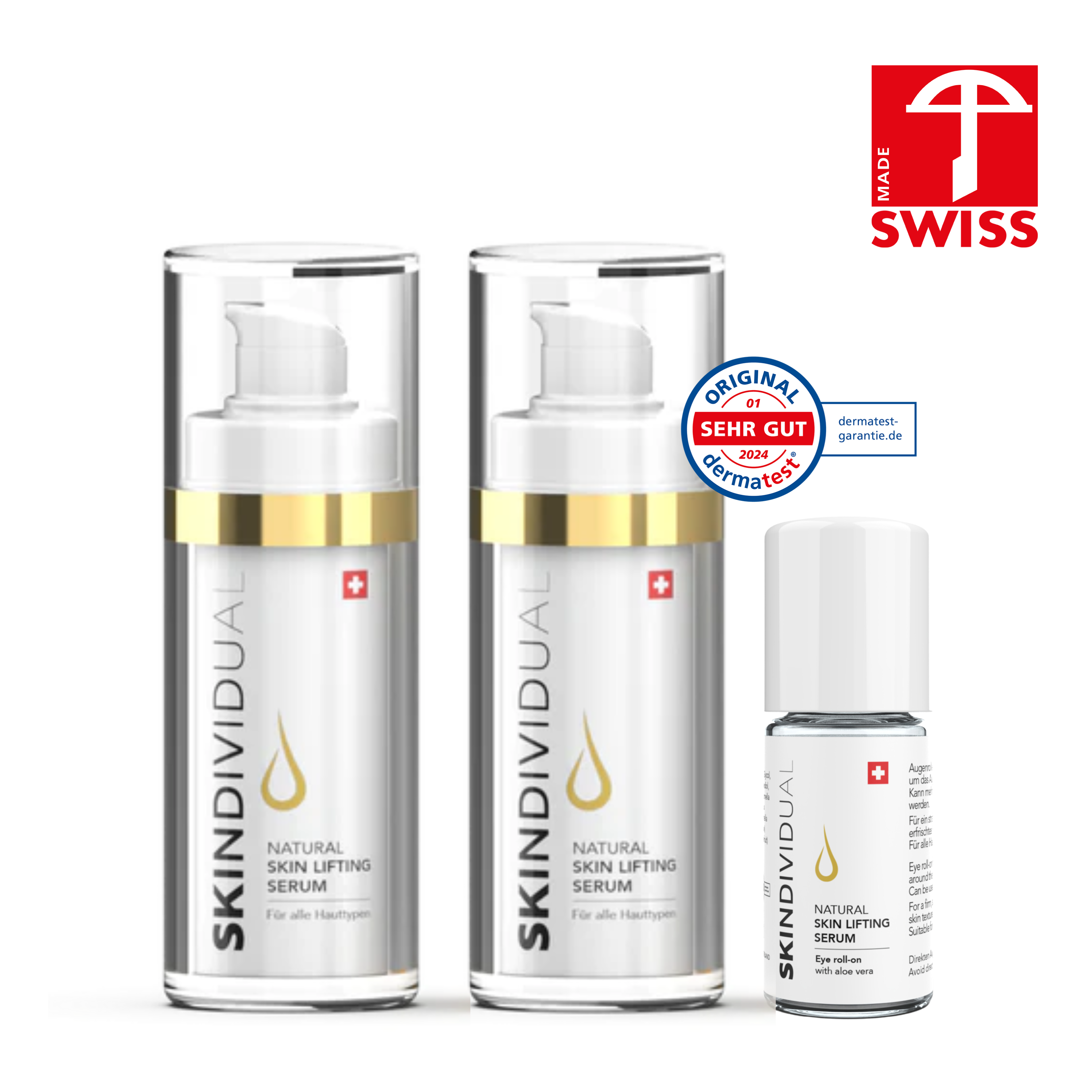
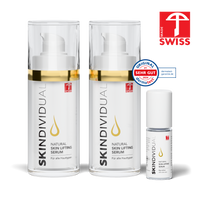
The Natural Skin Lifting Serum from SKINDIVIDUAL offers you a combination of:
- Spilanthol: Muscle relaxation and immediate lifting effect
- Hyaluronic acid: Replenishes moisture depots
- Centella Asiatica: Stimulates collagen synthesis
- Citrus paradisi: Antibacterial and clarifying
2. Minimalist Skincare Routine
Less is more. Instead of ten different products, a targeted, highly concentrated serum, as SKINDIVIDUAL offers, is often enough. The skin is not over-irritated but specifically supported.
3. Antioxidant Protective Layer
Care products with vitamin C, resveratrol, or niacinamide support the skin in defending against AGEs and environmental stressors. Especially for glycation skin, antioxidant care is essential.
4. Daily UV Protection
UV rays accelerate AGE formation. A light sun protection factor should therefore never be missing in your routine.
When you look in the mirror in the morning and your face appears dull, stressed, or restless – then your skin appearance might show you more than you'd like. Because what we eat, how we sleep, and which foods we consume regularly has a direct impact on our skin, our eyes, potential pimples, redness, or even dark circles.
Many people report that through small changes in consumption – for example, less sugar or dairy – not only the figure but above all the face changes. An unbalanced diet can also show through dark shadows under the eyes, a tired look, or dull skin.

Excursus: Milk Face, Gluten Face, and Wine Face
Do you want to understand holistically how individual food groups affect the skin? The following sections provide a brief overview.
Milk Face
- Cause: Casein- and lactose-loaded diet; often unrecognized lactose intolerance.
- Features: Swollen eyelids, hormonal pimples on the chin, shiny T-zone.
Gluten Face
- Cause: Long-term gluten consumption, especially in case of sensitivity.
- Features: Bloated cheeks, diffuse redness, stubborn pigment spots.
Wine Face
- Cause: Regular alcohol, especially wine (histamine + sugar).
- Features: Red cheeks, fine crêpey wrinkles, dehydrated lip edge.
Note: All three subtypes reinforce the negative effects of sugar on the skin. Anyone wanting to cure their sugar face benefits twice over if they – at least temporarily – also reduce milk, gluten, and wine-rich alcohol.
Frequently Asked Questions About Sugar Face
What does sugar do to the skin long-term? Sugar promotes the sugar-coating of the skin through glycation: collagen and elastin harden, the skin loses its resilience and ages faster. Long-term, deep wrinkles, a dull complexion, and increased blemishes develop.
Can excessive sweating be a sign of many AGEs? Yes. If collagen hardens due to glycation, the body can release heat worse – increased sweating is a typical compensation.
Does intermittent fasting help against pimples through sugar and wrinkles? Absolutely. The long sober phases stabilize blood sugar, reduce insulin surges, and thus slow down the formation of AGEs. Fewer insulin surges also mean less sebum production and thus fewer pimples.
Are erythritol or xylitol healthy substitutes? They don't trigger glycation, so they are okay in moderate amounts. Caution: generous use can cause bloating or diarrhea.
Do collagen drinks bring a measurable advantage? With consistent intake (at least 8 weeks), studies show a significant increase in skin elasticity and shallower wrinkle depth.
How quickly do sugar pimples on the face disappear after a change in diet? First improvements often appear after two to three weeks. For significantly clearer skin, you should consume less sugar consistently for at least six to eight weeks.
How do I recognize that my new routine is working? Best through weekly selfies in identical light or an app-supported skin analysis. Many notice fewer rednesses after two to three weeks, more firmness after four to six weeks, and significantly softer wrinkles after two to three months.
Your Path to a Radiant Complexion Without Sugar Face
Our skin is a miracle – it forgives much, but not everything. Sugar face, glycation, and the sugar-coating of the skin are not catchwords from the cosmetics industry, but real processes you can actively influence.
Your mirror does not lie, and sometimes images or selfies show us more about the state of our body than we like. A dull complexion, pimples through sugar, redness, or a typical sugar face are visible effects of our lifestyle.
The first step is awareness: now you know what sugar does to the skin and why sugar is bad for the skin. The second step is acting: with the right knowledge, conscious nutrition, and matching care products, you bring your face back to shine – completely without radical measures. Your skin will thank you.